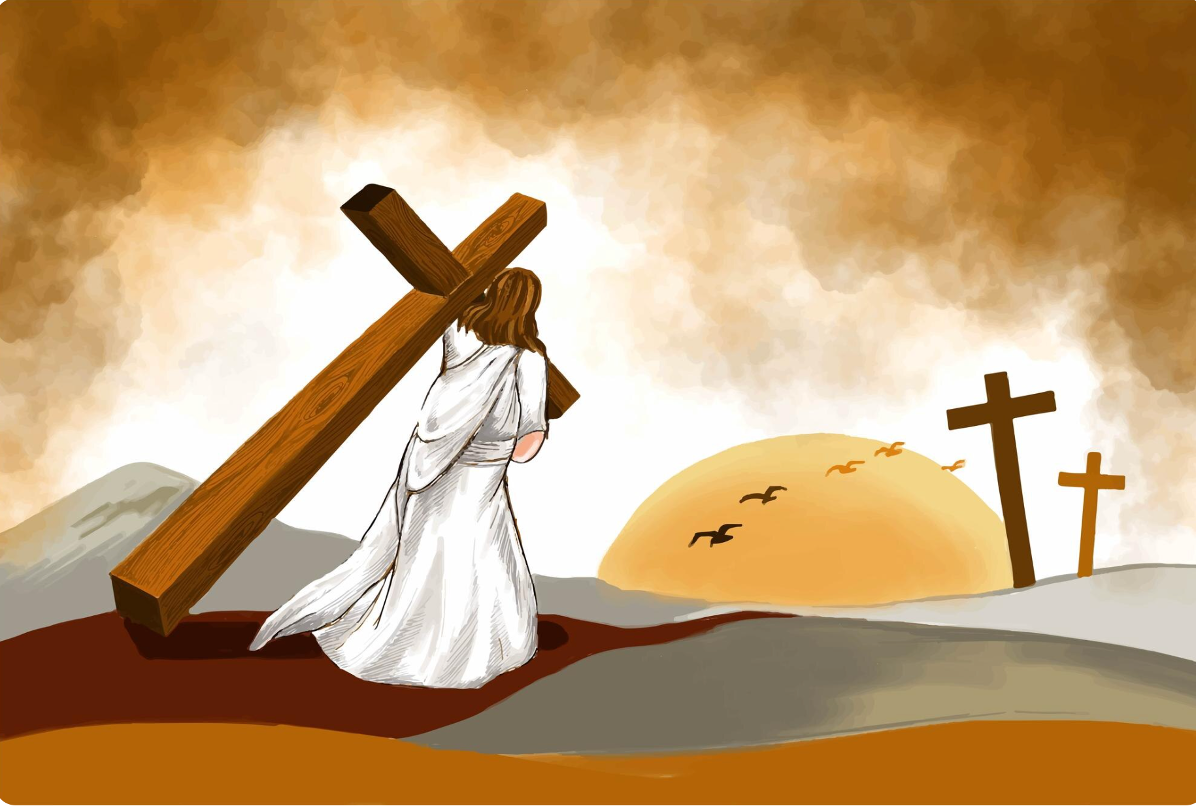
We’ve finally arrived at my favorite season of all seasons: Christmas — the time of twinkling lights, emotional commercials, overeating, pretending to like fruitcake, and yes… it’s my birthday. And in the spirit of the season, we’re going to explore the real significance of Jesus — not as religion, but as a lesson in destiny, resilience, and divine irony.
Christmas (according to folktales, tradition, Hallmark movies, and about five billion people) is the birthday celebration of Jesus Christ. It’s the season we associate with love, forgiveness, family reunions, and forced matching pajamas.
But there’s a deeper theme people rarely talk about — probably because it exposes something uncomfortable:
we humans have a long history of being wicked, dramatic, fearful, power-hungry creatures who love a good crucifixion scene.
And yet, hidden inside that very darkness is one of the greatest stories of hope.
This is my Christmas story — from a non-Christian — for anyone going through a modern-day crucifixion of their own.
The Short “Tea Version” of the Jesus Story
So here’s the gist in Ms. Normal style.
The significance of Jesus, even at birth, was wrapped in contradiction.
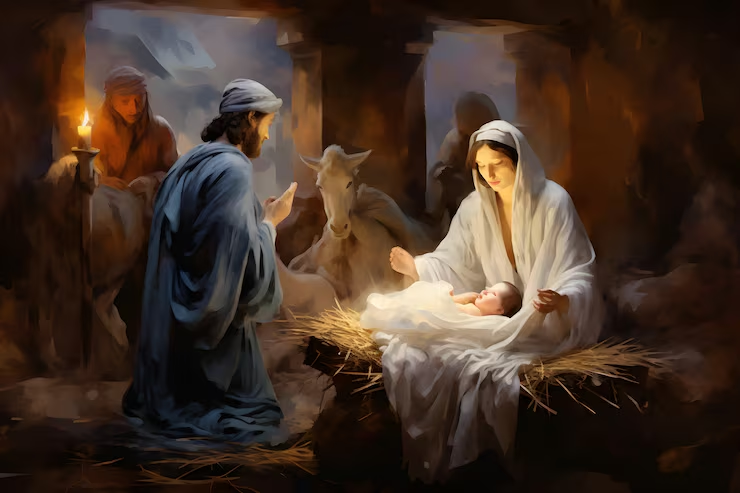
He was born in the most un-Godlike way imaginable. Not in a palace or under a diamond chandelier.
No — He was born in a manger, with hay and goats, and possibly a sheep chewing loudly in the background.
His mother Mary was married to Joseph, a poor carpenter who definitely didn’t sign up for cosmic drama when he proposed.
Long before Jesus arrived, religious leaders had received prophecies about a divine child — but they could not wrap their minds around a God who would show up wearing human skin.
Especially poor human skin.
Because let’s be honest: humans have always believed that power must come dressed in gold, crowns, and tax-collecting authority.
So when grown-up Jesus started saying things like:
“Hi, I’m the Son of God.”
The religious leaders clutched their pearls and replied:
“The audacity! The insult! The blasphemy!”
Meet the Opposition: The Pharisees & Sadducees
Two powerful groups, the Pharisees and the Sadducees, were especially triggered by Jesus.
-
The Pharisees were strict rule-followers who loved moral superiority.
-
The Sadducees were elite priests who rejected anything they couldn’t see, touch, control, or tax.
So when Jesus started gathering real followers — the kind who weren’t just listening but believing?
To them, this was a disaster.
Both groups feared two things:
-
What if Jesus was exactly who He said He was?
-
If divinity could be found in a carpenter’s household, then maybe everyone carried divinity.
And if Jesus was divine…their authority wasn’t.
That means, if ordinary people started thinking they were children of God, then:
-
Who would bow to earthly kings?
-
Who would obey the hierarchy?
-
Who would keep paying taxes?
That would completely ruin the social hierarchy they depended on.
Absolutely not.
So they plotted, accused Jesus of blasphemy and sedition, and — with Roman cooperation — crucified Him in the most brutal way imaginable.
And that should have been the end of the story.
But it wasn’t.
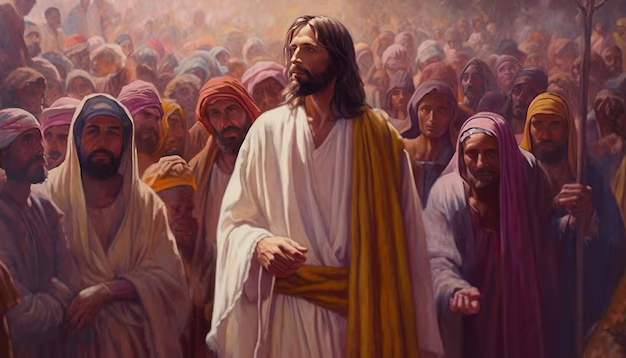
Then Came the Plot Twist…
They Tried to End the Significance of Jesus — and Accidentally Amplified It
After His death, Jesus’ spirit rose on the third day.
(That event is what Easter celebrates — not the chocolate bunnies, cute as they are.)
The crucifixion was meant to silence and erase Him and end the movement.
Except… it didn’t.
Fast-forward 2,000+ years later:
-
The Roman Empire collapsed.
-
The real Pharisees and Sadducees faded into history.
-
And the people who fought hardest against Him?
Their descendants now worship Him.
The same empire that once said,
“You cannot call yourself the Son of God,”
eventually turned Jesus into the centerpiece of their entire civilization.
Today, even the Pope — the highest religious figure of that same Rome — bows to the name of the man they once crucified.
Talk about divine irony.
This alone reveals the ultimate significance of Jesus:
No system, no hierarchy, and no hatred can stop a destiny written by the divine.
So What Does This Mean for You?
Here’s the real story behind the significance of Jesus — the spiritual lesson hiding inside all the drama:
If your purpose is divinely guided, nothing and no one can erase it.
Not humiliation, betrayal, sabotage, or injustice.
Not even a crucifixion — literal or metaphorical.
People may try to silence you, discredit you, erase your name, or bury you under the weight of their own self-righteousness.
But the life of Jesus reminds us of three unshakable truths:
📌 You cannot bury what God intends to rise.
📌 You cannot destroy a destiny written in spirit.
📌 You cannot stop a purpose simply because you dislike who carries it.
There are “Pharisees” and “Sadducees” everywhere today — in workplaces, families, relationships, institutions.
People who cling to power, ego, tradition, rules, or hypocrisy to justify their actions.
Some will even attempt their own version of your crucifixion.
But here’s the magic:
✨ What they fear most about you becomes the very thing your future generations will celebrate.
✨ What they try to prevent becomes the prophecy fulfilled.
Your job is simple, but not always easy. But, you must:
- Stay rooted in your conviction.
- Stay aligned with your spiritual guidance.
- Stay connected to the divine — whatever “divine” means to you.
Because if your path is guided, your rising is guaranteed.

The Danger of Self-Righteousness (A Note for Modern Pharisees)
The real cautionary tale in the significance of Jesus isn’t just the crucifixion — it’s the warning against:
- self-righteousness
- hypocrisy
- clinging to power
- choosing tradition over truth
- rejecting what doesn’t fit your worldview
People who embody these traits oppose anything that threatens their control — including other’s growth.
But their resistance doesn’t stop the prophecy.
It fulfills it.
Jesus’ life reminds us that truth will always outlive the systems built to silence it.
It reminds us that:
✨ Greatness often appears in humble packaging.
✨ Divine purpose often begins in unlikely places.
✨ And the people you doubt today may become the ones you celebrate tomorrow.
And Finally… a Small Imagination Exercise
If reincarnation is real, imagine Jesus scrolling through the internet right now, watching billions of people arguing about him, celebrating him, analyzing him, and decorating their Christmas trees in his honor.
Would he laugh, sigh, or say, “Not again,” and prepare for another lifetime of service and sacrifice?
Or — just maybe —
someone reading this is another Christmas waiting to happen.
A divine assignment wrapped in ordinary human clothing.
A purpose the world cannot deny, no matter the resistance.
And that, my friend, is the significance of Jesus Christ,
told by a non-Christian who believes in purpose, destiny, and the wild, unstoppable force of God.
CTA for Ms. Normal
If this story made you pause, smile, or rethink destiny in a new way, share it with someone who needs hope this season.
And if you want more stories about purpose, spirit, resilience, and the humor hidden inside our hardest moments, subscribe to Ms. Normal.
Because every woman deserves a little light — especially during her own crucifixion season.