Like everyone else, I have been watching the Epstein saga with a mix of horror, anger, and deep unease.
I am horrified first and foremost by the victims—by the girls and young women whose dignity, bodily autonomy, and right to be human were violated over years. Their suffering is real, documented, and irreversible.
And, no amount of analysis, outrage, or speculation should ever displace that truth.
I am also angered by the length of time this abuse persisted, by the institutional failures, the delays, the silence, and the systems that allowed injustice to sit comfortably in plain sight for decades.
But as the public conversation has moved from the abuse itself to the names of the rich and powerful allegedly connected to it, I’ve found myself taking a step back instead of leaning in. Not because the anger is unjustified, but because something familiar is happening—something I have seen before.
So, rather than join the growing fixation on who is who, who knew whom, who flew where, and who should be publicly shamed next, I want to offer a different perspective—one shaped by lived experience observing how a highly skilled predator operates.
This lens is not offered to diminish the scale, severity, or brutality of the harm that occurred, nor to erase victim testimony. It is offered to examine one mechanism among many: how predatory systems persist, how protection is manufactured, and how proximity to power can function as insulation, sometimes regardless of direct participation, and in most cases at great human cost.
What Elite Predators Actually Do
What gave me this understanding was not the commentaries or theories flying around, but learning it up close.
Through my own experience observing a highly skilled diabolical predator and con artist operating quietly in the background of an already volatile situation, I began to recognize familiar patterns: how desperation becomes an entry point; how protection is slowly reframed as loyalty; and how a targeted individual can be drawn, step by step, into actions that ultimately place them at risk themselves.
What appears, on the surface, as “help” is usually something else entirely. The predator positions themselves as indispensable, offering solutions, connections, reassurance, and strategy, while gradually entangling their target in decisions that compromise their judgment, ethics, and autonomy.
Over time, the target is no longer simply benefiting from the relationship; they are bound to it.
The most effective manipulation does not rely on force. It relies on leverage. Once reputational, financial, or legal exposure exists, whether real or perceived, self-protection replaces clarity. Cooperation becomes reflexive, silence becomes strategic, while disentanglement feels impossible. Not because of loyalty, but because of fear.
Watching this unfold made one thing clear to me: the manipulator does not require the target to fully understand the plot. It only requires them to believe they are protecting something important like, status, assets, image, or control. In that way, the target becomes both shield and captive at the same time.
This dynamic, I believe, is important to understanding how large-scale predatory systems persist. Because, not everyone involved is a mastermind, but once entangled, many find themselves protecting the very structure that endangers them.
Power as Cover, Not Participation
This is where the Epstein conversation becomes uncomfortable.
Applying a personal lens to a decades-long, multi-institutional sex-trafficking operation may feel reductive, and that discomfort is understandable. Survivor accounts and civil filings have included allegations of direct participation or coercion by certain powerful figures, even where those claims were later described as lacking corroborating evidence sufficient for criminal charges.
To be clear—and this matters—nothing here absolves anyone of moral responsibility. Protecting a predator, whether actively or passively, is a grave ethical failure. Full stop.
But moral failure and instrumental use are not the same thing.
Based on publicly available information, patterns I have observed in similar crimes, and my own experience studying how they operate, it is reasonable to consider the possibility that, some of the powerful individuals now central to public outrage may have functioned less as co-architects and more as useful shields.
Predators do not seek power because they admire it.
They seek it because it offers insulation.
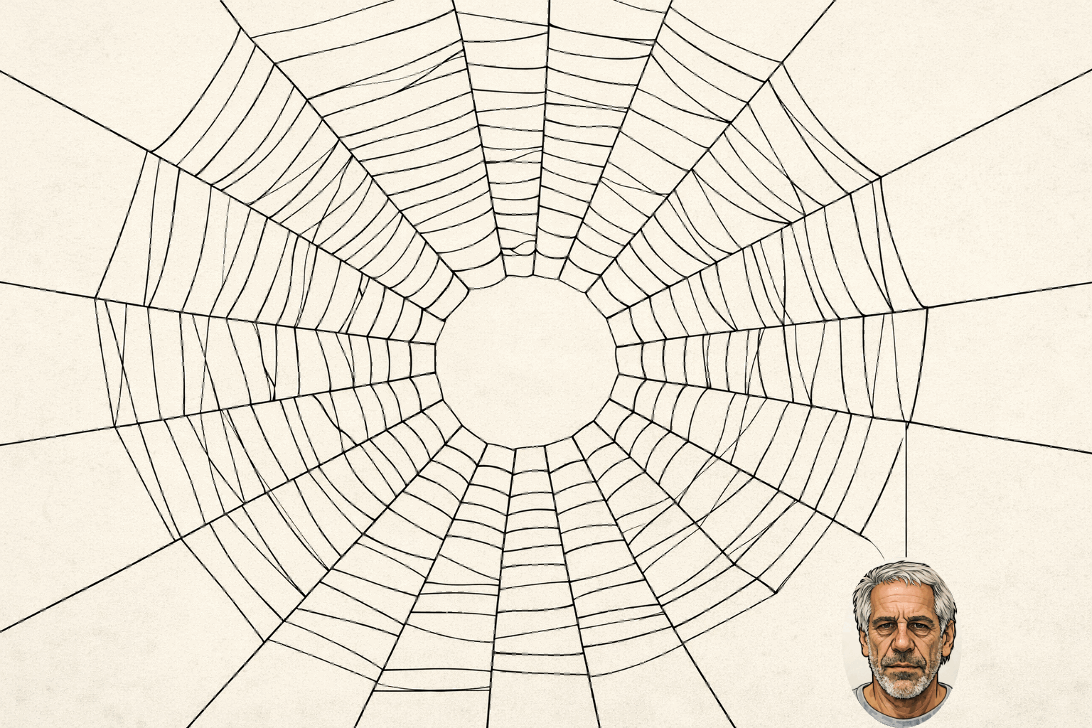
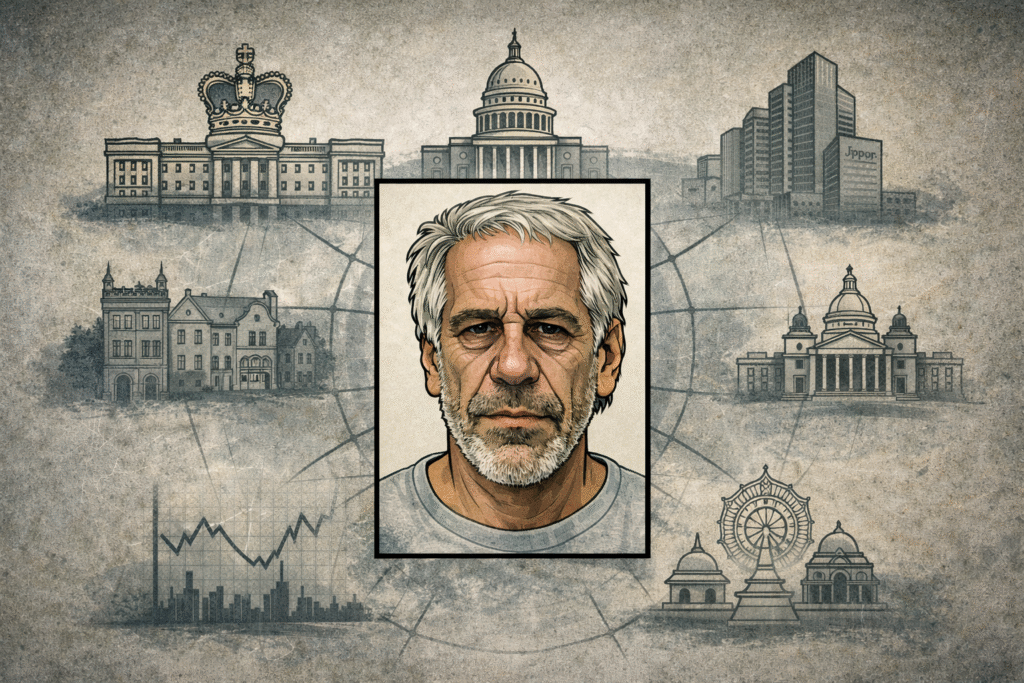
By embedding themselves in elite social circles like philanthropy, environmental causes, religious groups, academic institutions, exclusive gatherings, they create a protective fog. Wealthy people gain access, prestige, or social currency. The predator gains legitimacy.
Everyone believes they are using each other, but only one party knows the full design.
The Real Crime Scene
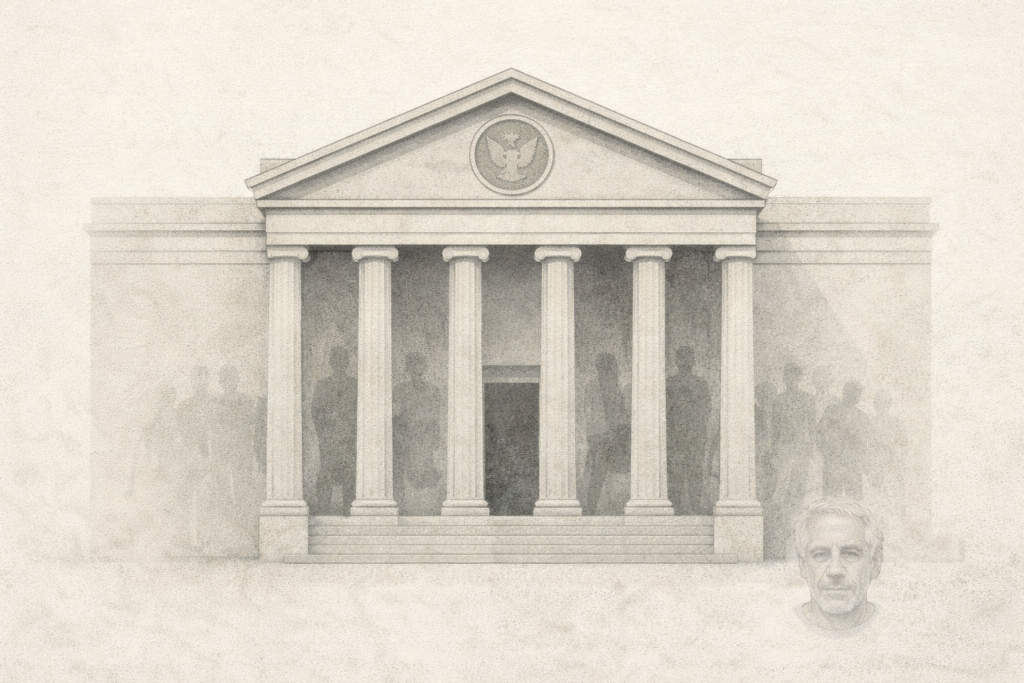
Effective predators hide in plain sight. They hide behind reputations, institutions, religion, and the collective fear of scandal.
When exposure threatens that structure, something predictable starts to happen. The focus shifts. The crime becomes secondary as attention turns to speculation, outrage, and name circulation.
The system survives because the conversation is redirected.
The victims fade into the background. The machinery remains intact.
Why the Names Distract Us
Public fixation on powerful names creates the appearance of accountability while quietly postponing the harder work of dismantling the conditions that made the abuse possible.
Social science research supports this dynamic: when outrage becomes attached to specific figures, it can inadvertently reinforce attention patterns that are emotionally satisfying but strategically ineffective, prolonging the protection of the very systems that enabled abuse.
As long as we are consumed by who was connected to whom, we avoid asking:
How did this persist for so long?
What institutional incentives discouraged intervention?
Why does reputation protection routinely outweigh human protection?
This is a classic feature.
On Endings and Illusions
Like many others, I am still emotionally and visibly pulled toward justice, first to the real victims—the girls and young women whose dignity, safety, and right to be human were violated. That harm does not resolve itself neatly, and doesn’t end with headlines, arrests, or even death. It lingers.
Whether Epstein’s death, in whatever form it occurred, constitutes justice is not for me to decide. And perhaps that uncertainty is part of the pain. But there is no need to speculate endlessly about how this story ends, or to chase theories that offer intrigue without truth.
What matters is this: once a predator’s protective shield begins to crack—once the system that insulated them starts to fracture—the end has already begun. It may not arrive with drama and it may not be public, but it is final.
The true reckoning is exposure.
So, Epstein’s death is, in many ways, beside the point. When the shield breaks, a predator is already finished—not just legally or socially, but psychologically and existentially.
What remains is the harder, more necessary work: seeing clearly what allowed the harm to persist, and refusing to let it happen again.
The Uncomfortable Conclusion
The most successful crimes are not the ones that shock us.
They are the ones that recruit our outrage to protect themselves.
Epstein didn’t just exploit women and children. He exploited —
Systems.
Vanity.
Fear.
Before we let outrage carry us away, I want to ask my readers to consider this: this saga is not only about one man’s depravity.
It is about systems that reward silence, monetize access, and mistake reputation for virtue.
If we remain focused on names rather than mechanisms, the machinery will continue, quietly, efficiently, and largely unchanged.
And the most vulnerable will continue to pay the price.
Editor’s Note
This essay examines systemic mechanisms through publicly available reporting, court filings, and survivor accounts. It does not speculate beyond documented sources, nor does it seek to adjudicate individual guilt. Its purpose is to interrogate how abuse persists—not to diminish the harm endured by victims, but to understand the conditions that allow it to continue.
________________
Sources & Further Reading
1. AP News — DOJ document releases and Epstein investigation overview
2. AP News — Reporting on unsealed Epstein client list and trafficking allegations
3. Reuters — Reporting on Epstein’s death and institutional failures
4. Miami Herald — Perversion of Justice investigative series
5. U.S. Virgin Islands v. JPMorgan Chase Bank — civil court filings
6. New York City Medical Examiner — ruling on Epstein’s death
7. Similarities in modus operandi of child sexual offending — Social science comparison of institutional vs non-institutional offenders
8. Shielded by Power: Epstein and the Persistence of Elite Privilege — Sociological analysis of elite insulation