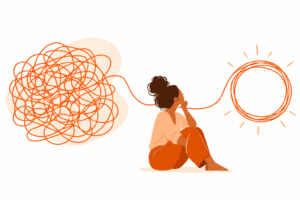
A Conversation That Shifted My Perspective
Recently, I spoke with a man who was genuinely confused about why his wife couldn’t forgive and forget his “one” indiscretion. He had been faithful for years afterward. He had apologized. He had gone to counseling. In his mind, he had done everything a remorseful partner is supposed to do.
Yet their marriage was still unraveling.
As he talked, something in his story caught my attention—something that made me rethink how we talk about betrayal and what it actually does to a relationship.
We most times focus on the couple as a whole, or on the person who committed the betrayal and their path to redemption. But the person who received the deception? Their experience is usually the part we rush past, minimize, or misunderstand.
And that’s where the real story begins.
“This post is not intended to diagnose anyone, but to speculate about what could be happening in a situation like this.”
When Deception Enters a Marriage
Deception is one of those words that feels clinical until you’re the one living through it. At its core, deception is intentionally misleading someone—providing false information, withholding the truth, or creating a false impression to avoid consequences or gain something for yourself.
It shows up everywhere in life, but in marriage, it hits differently. It cuts deeper. It lingers longer. And it reshapes people in ways we rarely acknowledge.
Most people think of cheating when they hear “marital deception.” And yes, emotional or physical affairs are major forms of betrayal. But deception in marriage can take many shapes:
• Hiding finances
• Concealing communication with someone
• Masking behaviors or habits
• Falsifying information
• Withholding important truths
• Creating false impressions to avoid conflict
These actions don’t just “cause problems.” They can split relationships, lead to divorce, or create years of emotional fallout. And even when the relationship survives, the damage doesn’t magically disappear.

Why Deception Is So Dangerous
When you lie to someone—especially someone who trusts you—you don’t just break trust in the relationship. You break trust in their entire internal world.
Healthy relationships require trust on multiple levels:
• Trust in the other person
• Trust in one’s own perception
• Trust in one’s ability to judge situations
• Trust in one’s sense of reality
When deception shatters that foundation, something deeper happens. A person begins to question everything they know about life, including themselves.
They start to wonder:
• How did I not see this?
• What else have I missed?
• What else is untrue?
• Can I trust my own judgment?
• Was my entire relationship a lie?
This is where disillusionment sets in. And disillusionment is not a small thing—it’s a psychological earthquake.
People begin to distrust relationships, their abilities, their decisions, and even their memories. They expend mental energy scrutinizing everything. They live on edge. They double‑check what they once accepted without question.
Life becomes uncertain. And when life becomes uncertain, people can behave in ways that seem irrational or extreme—but are actually rooted in trauma. Some shut down emotionally. Others suppress their pain until it erupts.
Because even when they forgive, they often never heal.
— ⋅ — — ⋅ — — ⋅ —
The Man and His Wife: What Really Happened
Let’s return to the man I mentioned.
After his indiscretion, he apologized. His wife agreed to try again. They went to counseling. He went to individual therapy. He became transparent—almost painfully so.
But things didn’t get better. They got worse.
Two years later, she still wanted to track his movements. She monitored his calls. She questioned every dollar he spent. She didn’t allow female guests in their home—not even family. She isolated them from others. She lived in a constant state of fear and suspicion.
He told me, “She has become crazy… I love her, but I can’t live like this. How do I regain her trust?”
What he couldn’t see was this:
She no longer believed in trust.
Trust had become an illusion—something unreliable, something dangerous. Imagine waking up one day and discovering that the color blue is actually red. Suddenly, you’d question every color you’ve ever known. If blue isn’t blue, what else isn’t what it seems?
Now apply that to a marriage:
If the love wasn’t what I thought…
If the commitment wasn’t what I thought…
If the honesty wasn’t what I thought…
If the person wasn’t who I thought…
Then what exactly was real?
That question can unravel a person for years. And unless that wound is understood properly, what looks like “she’s doing too much” may actually be someone trying desperately not to be deceived again.

The Ripple Effect of Deception
Although cheating is one of the most common forms of marital deception, the issue goes far beyond affairs.
• A woman lying about the paternity of one child raises questions about all her children.
• A parent lying about a child’s birth story creates lifelong identity confusion.
• A spouse lying about finances undermines the foundation of partnership.
The same psychological damage can happen when someone lies about:
• addiction
• debt
• family history
• legal trouble
• major life decisions
Because the injury is not just in the specific lie—it’s in what that lie does to the entire foundation of trust.
And sometimes, that review doesn’t stop with the marriage. It reaches backward into childhood, family patterns, prior relationships, and old wounds that were never fully resolved.
That is why deception can feel so much bigger than the “incident” itself.
Because often, it is.
How Someone Actually Recovers From Marital Deception
Yes, people can recover from deception.
But not if the healing process is centered only on saving the marriage. That is where many couples go wrong.
Real recovery must begin with the person who was harmed.
Not rushing forgiveness.
Not jumping into couples counseling.
Not focusing on the betrayer’s remorse.
Before the marriage can heal, the wounded partner must heal. Before the couple can rebuild, the individual must rebuild.
In the case of the woman whose husband betrayed her, she needed:
• individual therapy
• emotional validation
• support from safe people
• physical and psychological space
• time without pressure to “decide” too quickly
• freedom to feel what she actually felt
• permission to grieve what she thought she had
And yes, that healing may take a long time.
Longer than the offending partner would prefer.
Longer than outsiders think is reasonable.
Longer than the marriage may be able to survive.
Only then can she decide how to move forward.
But this rarely happens. Instead, she is judged, pressured, misunderstood, and told to “get over it,” “move on,” “be strong,” or “start fresh.”
If she forgives quickly, she’s enabling.
If she doesn’t, she’s dramatic.
Either way, she loses.

What the Deceiving Partner Must Understand
If you are the one who caused the deception and you genuinely want to repair the damage, you have to accept something difficult:
• You do not get to dictate the timeline of the healing.
• You do not get to decide when enough apology has been offered.
• You do not get to say, “But that was two years ago.”
• You do not get to demand normalcy because you are now uncomfortable with the consequences.
And transparency alone is not the same as trust.
Sharing your location is not the same as restoring safety.
Giving passwords is not the same as rebuilding reality.
Attending therapy is not the same as repairing internal collapse.
These things can help, but they do not erase the psychological impact of betrayal.
If you truly want to show change, one of the clearest ways is this:
Respect the other person’s healing, even when it does not benefit you immediately.
That means:
• not rushing them
• not minimizing their pain
• not weaponizing their reaction
• not calling them crazy for struggling
• not expecting praise for basic accountability
• not punishing them for being changed by what you did
That is what remorse looks like when it has matured.
— ⋅ — — ⋅ — — ⋅ —
My Honest Take
What I told that man was this:
As much as I felt for him, this was no longer just about whether he had changed. It was about whether he truly understood what had happened inside his wife—not what she was doing now, not how inconvenient it felt, not how isolated he felt.
It was about supporting her healing—even if it took years. Even if it meant he didn’t get the outcome he wanted. Even if it meant the marriage didn’t survive.
Because healing doesn’t guarantee reconciliation. Sometimes healing leads to rebuilding together. Sometimes it leads to parting ways with peace. Both are valid.
That’s what real accountability looks like.
But many people struggle with this—not because they’re incapable, but because they underestimate the depth of the wound. If you betray someone deeply and your primary concern is when they will become easier to live with again, then you still may not fully understand the wound.
And that, right there, is why so many relationships fail even after the affair ends, the lying stops, or the counseling begins.
The behavior may change.
But the damage remains untreated.
Final Thoughts: Deception Doesn’t End When the Lie Is Exposed
The lie may end in one moment. But the consequences can live in the body, mind, and heart of the deceived person for years.
That is why marital deception is so dangerous.
It can break more than trust.
It can distort reality.
It can fracture identity.
It can leave someone doubting life itself.
And if recovery is ever going to be real, it cannot begin with “How do we get back to normal?”
It has to begin with:
What did this do to the person who had to survive it?
That is where healing starts. And sometimes, that is the only honest place to begin.
If you’ve been deceived, your pain is real. Your confusion is real. Your healing matters.
If you’ve deceived someone, your remorse is important—but it’s not the center of the story. Supporting their healing is.
Call to Action
If this post resonated with you, share it with someone who may need these words today. And if you’re navigating deception in your own relationship, consider taking the next step toward healing—whether that’s therapy, honest conversation, or simply giving yourself permission to feel what you feel.
Your healing matters. Your story matters. And you’re not alone.