

There are shows you watch for entertainment.
Then there are shows that quietly sit beside you afterward like an uncomfortable friend asking questions you didn’t plan to answer.
That was Love and Death for me.
What started as a casual Netflix binge turned into one of those stories that lingered in my chest long after the credits rolled. And honestly, the reason I felt compelled to share this reflection is because I think there’s something important here for women — especially those navigating new relationships, emotional loneliness, sexual dissatisfaction, or trying to resurrect marriages that have quietly gone stale.
Not because the story offers perfect answers.
But because it reveals how easily ordinary people can drift into dangerous emotional territory while believing they are still in control.
And somehow, somewhere between church choir rehearsals, suburban routines, and carefully negotiated secrets, somebody ended up dead with an axe involved.
Which raises deeply uncomfortable thoughts about how people walk themselves into these situations while genuinely believing they are still good people.
Because that’s the thing this show does brilliantly. Nobody starts out looking like a villain.

The Kind of Affair That Looks Harmless at First
The true story follows two married people in a late-1970s Texas suburb who drift into an affair after loneliness, emotional starvation, and sexual dissatisfaction quietly settle into their marriages.
Not explosive or abusive marriages.
Just… stale ones.
And honestly? That’s what makes the story dangerous.
Because many women watching will recognize parts of themselves in it.
Not necessarily the cheating part.
But the emotional drought part.
The feeling of becoming functional instead of alive.
The wife at the center of the story wasn’t isolated or neglected in the obvious sense. She was busy. Deeply involved in church. Active socially. A mother. A wife. A choir member. A Bible-study teacher. A woman doing everything “right.”
Yet underneath all that structure was a woman slowly starving for aliveness.
And then came attention.
Not even extraordinary attention. Just enough emotional and sexual energy to wake something up.
That’s the part women don’t always talk about honestly: sometimes affairs are not driven by lust alone. Sometimes they are driven by resurrection.
Someone suddenly sees you.
Desires you.
Listens to you.
Looks excited when you enter a room.
And after years of responsibility, routine, caregiving, and emotional suppression, that can feel less like temptation and more like oxygen.
The Most Dangerous Affairs Are the “Logical” Ones
What fascinated me most was how organized the affair was.
These people practically held board meetings before cheating.
Pros and cons were discussed.
Rules were negotiated.
Boundaries established.
Emotions supposedly controlled.
No one planned to leave their spouse.
Nobody wanted destruction.
Nobody intended violence.
It was positioned as a practical arrangement between consenting adults.
Just two people helping each other survive emotionally.
Honestly, parts of it almost sounded mature.
Which is exactly why it became dangerous.
Because human beings love believing we can outsmart consequences through planning.
We think:
- If we are discreet enough…
- If we remain emotionally detached…
- If nobody finds out…
- If we keep functioning publicly…
- If we maintain appearances…
…then maybe reality will cooperate with our fantasy.
But emotions are not spreadsheets.
Marriage is not a laboratory experiment.
And betrayal does not stay politely inside the container people build for it.
The Real Problem Wasn’t Just the Affair
What struck me most was that the affair itself almost looked secondary to the deeper issue underneath it:
misdirected energy.
The woman at the center of the story had fire in her.
Not merely sexual fire. Life force.
The kind of energy that wants to build, create, conquer, feel, expand, express.
But instead of being channeled into passion, purpose, creativity, business, ambition, art, adventure, or reinvention… it got trapped inside repetitive obligation.
And trapped energy eventually looks for an exit.
This is something I think many women misunderstand about desire.
Sexual energy is not just about sex.
It is deeply connected to:
• creativity
• vitality
• confidence
• productivity
• ambition
• emotional intensity
• personal expression
It is life‑force energy.
That same intensity can build companies.
Write books.
Train bodies.
Create art.
Lead movements.
Transform careers.
Or…
it can end up in somebody else’s husband’s backseat.
And before anyone screams at me, let me say this clearly: I am not romanticizing cheating.
I’m saying many women underestimate how dangerous suppressed passion can become when it has nowhere healthy to go.
Ironically, once the woman in the story started channeling herself into a business venture she genuinely enjoyed, the emotional dependence on the affair weakened significantly.
That detail stayed with me.
Because sometimes what we call sexual dissatisfaction is actually existential dissatisfaction wearing lingerie.
The Myth That “Good Women” Don’t End Up Here
One thing this story quietly destroys is the stereotype that affairs only happen among reckless or immoral people.
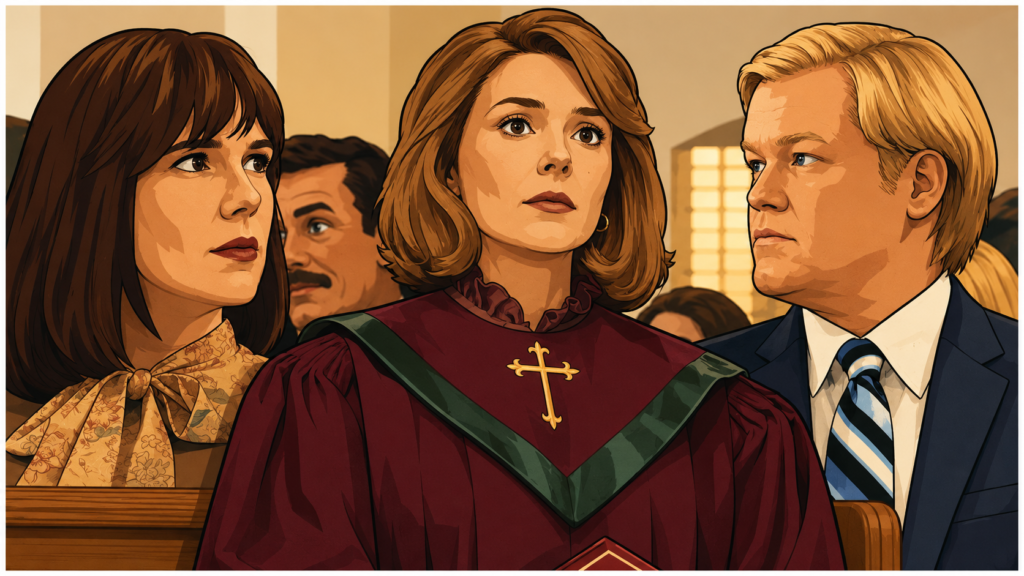
These were church people.
Choir people.
Volunteer people.
Board-member people.
People who probably looked stable, respectable, trustworthy, and disciplined from the outside.
That’s important because women are often taught that danger looks wild.
But many emotional affairs begin in the safest‑looking environments imaginable:
• church groups
• workplaces
• volunteer settings
• school communities
• friendships
• parenting circles
Places where emotional familiarity slowly grows roots.
Nobody wakes up saying:
“Today I shall destroy my life.”
It usually begins with:
“We just connect.”
“He understands me.”
“It’s harmless.”
“I deserve happiness.”
“We’re just talking.”
“My marriage is already dead anyway.”
And sometimes… those statements are not entirely false.
That’s what makes these situations morally complicated and psychologically fascinating.
The Marriage Bootcamp Came Too Late
One of the most frustrating parts of the love and death series was watching how much improvement became possible once the couples actually began communicating honestly.
The marital counseling retreat helped them reconnect.
Conversations opened up.
Needs were acknowledged.
Emotional understanding increased.
You could literally watch healing trying to happen.
But by then, the emotional bomb had already been planted.
And this is the tragedy of many relationships:
people wait until the house is on fire before looking for water.
Women endure dissatisfaction silently for years.
Men emotionally disappear into work, distraction, ego, routine, or avoidance.
Both people adapt to disconnection until somebody eventually reaches for relief elsewhere.
Then suddenly everyone wants therapy.
The show left me asking:
Why do couples wait until betrayal enters the room before taking emotional neglect seriously?
Why does it require almost losing everything before people become honest?
The Part That Disturbed Me Most
The scariest lesson from this story was not the affair.
It was the unpredictability of human emotional pain.
Because this is what people forget when they enter secret relationships:
you are not only managing your own emotions.
You are gambling with other people’s nervous systems too.
Some people can survive betrayal.
Some cannot.
Some people rage quietly.
Some implode internally.
Some become obsessive.
Some become violent.
Some lose their minds.
Some lose their sense of reality.
And the terrifying part is this:
you often do not know which reaction you are triggering until it is too late.
People think secrecy protects them.
But secrets create pressure.
And pressure always leaks somewhere:
• through guilt
• through confession
• through suspicion
• through behavioral changes
• through emotional distance
• through intuition
• through somebody noticing something “off”
In this case, one confession opened the floodgates to tragedy.
Then suddenly the fantasy collapsed.
And underneath the thrill was blood.
Literal blood.
So What’s the Lesson Here?
The lesson here isn’t “women are bad,” or “desire is evil,” or “stay in miserable marriages forever.”
Honestly, I think the lesson is more uncomfortable than that.
The lesson is that human beings are far less emotionally controlled than we think we are.
We underestimate:
• loneliness
• suppressed desire
• emotional neglect
• ego
• fantasy
• resentment
• boredom
• unmet needs
• curiosity
• emotional hunger
And we overestimate our ability to contain consequences once we start playing with fire.
Especially when the fire feels good.
What Women — Including Me — Can Learn From This
Watching this story forced me to think about women’s emotional and sexual lives differently.
From an honest Perspective, not a judgmental one.
Some lessons that stayed with me include:
1. Boredom is not harmless.
A woman disconnected from passion, purpose, creativity, or emotional intimacy becomes vulnerable in ways she may not even recognize.
2. Emotional affairs rarely feel dangerous at the beginning.
That’s precisely why they become dangerous.
3. Desire itself is not the enemy.
Unexamined desire is.
4. Sexual dissatisfaction is often connected to deeper dissatisfaction.
Sometimes the issue is the marriage.
Sometimes it’s identity loss.
Sometimes it’s stagnation.
Sometimes it’s buried ambition.
5. Communication delayed becomes destruction accelerated.
Many couples discuss intimacy only after damage occurs.
6. Third parties complicate everything.
Even when intentions seem “clean.”
And perhaps the biggest lesson of all:
Sometimes the smartest decision is not asking,
“Can I get away with this?”
But rather:
“If this explodes, who else burns with us?”
Final Thoughts: The Fantasy Always Costs More Than Expected
I still don’t fully know how I feel about the verdict at the end of the series.
But I do know this:
Nobody walked away untouched.
Not the marriages.
Not the children.
Not the families.
Not the church community.
Not even future generations tied to the story.
All from a romance that once felt thrilling, manageable, harmless, and deserved.
That’s the unsettling brilliance of Love and Death.
It reminds us that some of life’s greatest disasters do not begin with evil intentions.
Sometimes they begin with loneliness…
chemistry…
attention…
and two people convincing themselves they are mature enough to control human nature.
Spoiler alert:
they usually aren’t.
What do you think?
Can emotional and sexual dissatisfaction inside marriage truly be managed safely without outside involvement? Or are many couples waiting too long to address problems before damage begins?
Let’s talk in the comments.


Wow.. very interesting read and it’s reality.
Weldone sis.