When Business Logic Shows Up in Love
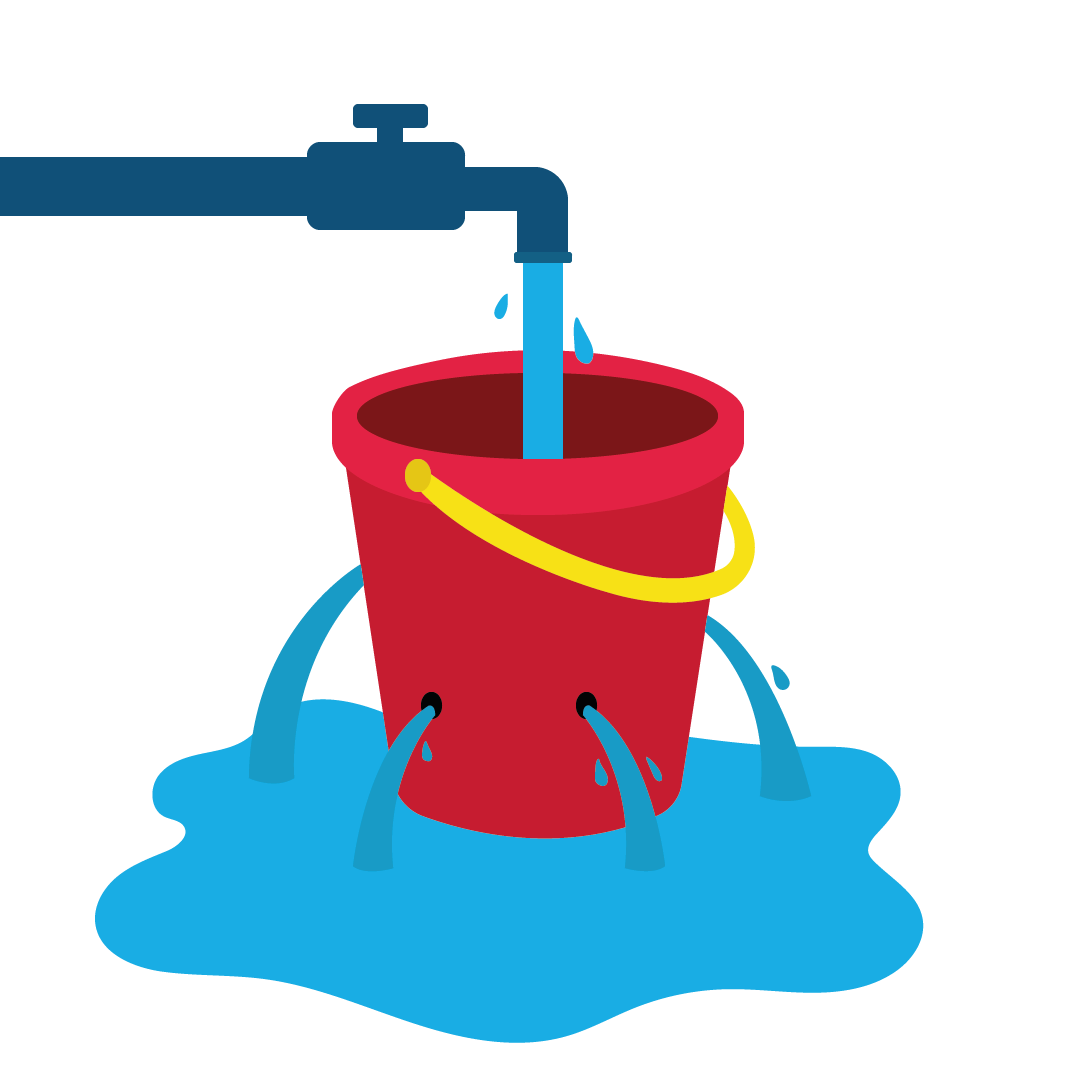
Escalation of commitment in relationships is the slow invisible process of continuing to invest in something long after the cost outweighs the return.
In business terms, escalation of commitment happens when we keep throwing money, time, or resources into a failing investment simply because we have already invested so much. We ignore new information, rationalize losses, and hope for a turnaround that never comes.
“This has to work.”
“I’ve already put too much into this to stop now.”
And, this happens in relationships too.
This post is about how escalation of commitment quietly enters relationships, why it hits women harder, and how discernment, not sacrifice, is the most grounded response.
The Woman Who Came to Me at the Edge
I recently had a session with a woman whose story felt painfully familiar.
She had spent years trying to influence her marriage toward survival. Years of fasting and praying. Of spending significant money on self-improvement, not for herself, but to impress a husband and mother-in-law who never approved. She had spent years navigating family politics, positioning herself as “the good wife,” “the patient wife,” “the spiritual wife.”
And yet, she found herself trapped in a dangerous love triangle.
A third party refused to let go. Her husband appeared confused, inconsistent, and detached from reality. After small misunderstandings, he would erupt in unusual anger, abandon her, and disappear for months. She believed she could change the situation, and she felt compelled to fight harder, pray harder, spend more, and endure more in hopes of winning him back.
Meanwhile, her life was unraveling.
She had lost a significant amount of weight, lived in a constant fog, and was emotionally absent and feared she was losing her only child to neglect. She was mentally exhausted and financially depleted.
Then she said something that stopped me cold.
“God doesn’t support divorce.”
So here she was, standing at the edge—unsure whether to keep fighting or finally let go.
As she spoke, I couldn’t help but notice how deeply the principles of escalation of commitment were playing out in her life.

Escalation of Commitment: The Business Definition
In psychology and economics, escalation of commitment refers to continuing to invest in a failing decision despite increasing losses.
It often leads to:
- Financial collapse
- Emotional burnout
- Organizational failure
- Decision paralysis
One of the most recommended ways to effectively avoid escalation of commitment is simple but uncomfortable:
Focus on future value, not past investment.
Lets say an investment is worth $100, any additional expense must remain below that value to generate gain. For example,
- Invest $100, gain $100. Future value equals zero. Nothing gained, nothing lost. Lessons learned.
-
Invest $101 for a $100 return. You have lost $1.
-
Continue investing without intervention, and the losses compound until the entire operation collapses.
Escalation of commitment is continuing to fund loss while hoping for a miracle.
Why Escalation of Commitment in Relationships Are More Dangerous
Relationships are not spreadsheets that we can neatly quantify:
- Years invested
- Emotional labor
- Caregiving
- Memories built
- Careers paused
- Bodies changed
- Children raised
But escalation of commitment in relationships still show up, and its consequences are usually far more devastating, especially in relationships that become toxic, emotionally abusive, or spiritually and psychologically destabilizing.
In my own experience, I have written extensively how escalation of commitment in a toxic environment affected my mental health, drained my finances, and impaired my productivity.
These outcomes are not theoretical. I have seen women spiral into psychiatric crises, lose their children, be financially wiped out, physically harmed, or killed while trying to “hold the family together.” Sometimes by partners, third parties, or despair.
This is not strength, but slow collapse.
How Escalation of Commitment in Relationships Sneaks In
Escalation does not arrive dramatically. It creeps in.
It looks like this:
- Praying instead of confrontation
- Aggressive self-improvement instead of creating boundaries
- Staying silent instead of seeking clarity
- Enduring instead of seeking reciprocity
- Surviving instead of seeking partnership
At each stage, the woman tells herself she is being patient, faithful, strategic, or strong. Meanwhile, the cost keeps rising.
And because the investment is emotional, spiritual, and maternal, not just financial, the losses feel harder to admit.

What Escalation of Commitment Means for Women
When a union is corrupted, the future value of staying can fall below zero.
And this is the question many women avoid:
What is the future value of my commitment if I lose myself, my sanity, or my child?
Because a woman who is emotionally destroyed has no future value in that relationship.
A woman institutionalized due to mental breakdown has no future value.
A woman who survives but is hollowed out, depleted, and chronically traumatized is paying a cost that cannot be romanticized.
Here’s a Simple Framework for a Complex Reality
Let us simplify something difficult.
Assume the future value of saving the marriage is 1.
Biblically speaking, spouses become one.
Now consider the losses.
-
If, in the process of fighting, the woman loses herself, that one becomes -1.
-
If the child is lost to neglect, trauma, or despair, the outcome becomes -1.
-
If the loss of that child triggers a mental collapse, the outcome compounds further.
Escalation of commitment is continuing to fight when the future value is already negative.
At that point, the question is no longer about faith or endurance. It is about arithmetic and survival.
Infidelity, Corruption, and the Real Cost of Staying
When a union is corrupted by infidelity or immoral acts, women often absorb losses silently.
Men involved in extramarital affairs bring home:
- Disease risks
- Financial devastation
- Emotional chaos
- Dangerous third parties
Some men become financially spellbound, draining life savings to support a mistress while their families slip into survival mode. Children pay the price. Mothers absorb the blame.
Even when a man eventually returns, the union rarely returns to what it was. Trust does not regenerate on demand.
Scars remain.
And scars reshape love permanently.
The Fallacy of “For Better or Worse”
Does this mean women should never fight for their marriages?
No.
But “for better or worse” assumes something critical: the marriage is a covenant, a one-flesh union intended to be permanent.
“Therefore a man shall leave his father and his mother and hold fast to his wife, and they shall become one flesh.” Genesis 2:24
A covenant is not just permanence. It is mutual responsibility, protection, faithfulness, and order. It assumes two people are walking in agreement, honoring each other’s dignity, and actively preserving the union they are called to steward together.
And, it presumes that both parties are fighting a common enemy as one.
But once a third party enters—whether through infidelity, abuse, addiction, or sustained betrayal—the covenant is already broken. Not by the woman’s response, but by the violation itself.
A marriage shaped by repeated adultery, manipulation, chronic deceit, or emotional abuse is not operating under covenant. It becomes a structure the woman is holding up alone, and calling it “God’s will” does not make it sacred.
God does not require anyone to remain in harm’s way to preserve the appearance of a union He did not authorize in its broken state.
In those situations, “for better or worse” becomes a cross a woman carries alone. And that cross may not be God’s.
Faith was never meant to demand self-erasure to prove loyalty.
So when women say, “God doesn’t support divorce,” the deeper question may be this:
Is this union still aligned with the covenant God designed?
Because if it is not, she may already be standing alone.
Standing on Business Sometimes Means Walking Away
I had no advice for that woman in the way she expected.
I did not tell her to leave or to stay, but to assess:
- The future value of continuing the fight
- What she has already lost
- What she is at risk of losing next
- What those losses are worth to her
- What standing on business means to her
Because, standing on business is not blind perseverance. It also does not mean stubborn endurance.
It means responding to reality with discipline.
In business, standing on business means reviewing the numbers and making hard calls. In relationships, it should mean the same. Yet many women confuse standing on business with standing still while bleeding.
Sometimes the most disciplined, rational, and even godly decision is to stop the bleeding.
To preserve life.
To preserve sanity.
And, to preserve children.
Letting go is not abandoning love.
It is refusing to finance destruction. And thats standing on business.
Final Reflection
Escalation of commitment disguises itself as faith, loyalty, and endurance.
But strength without discernment becomes self-destruction.
Letting go is not failure.
It is clarity.
And sometimes, the most radical act of faith is to stand on business by choosing life.
Call to Action (CTA)
If this post resonated with you, share it with a woman who is quietly carrying more than she should.
Subscribe to Ms. Normal for grounded reflections on relationships, boundaries, faith, and rebuilding life after loss.
Your clarity may save someone else’s life.