Last time, I gave you a blueprint for how to get out of a problem.
I laid out the practical mechanics: understand what happened, change your mindset, stop doing what isn’t working, accept the consequences, ask for help, and do a complete 180.
And for many situations, those principles work. I’ve used them myself to navigate my fair share of messes—small ones, big ones, and a few so complicated I couldn’t even figure out where they started.
Today, I’m here to talk about what happens when you follow all those rules—and the door stays locked.
Because what happens when you’ve done everything right—you’ve owned your part, apologized, sought help, told the truth, prayed, and tried to fix what was broken—and the problem still won’t go away?
At some point, we have to consider an uncomfortable possibility:
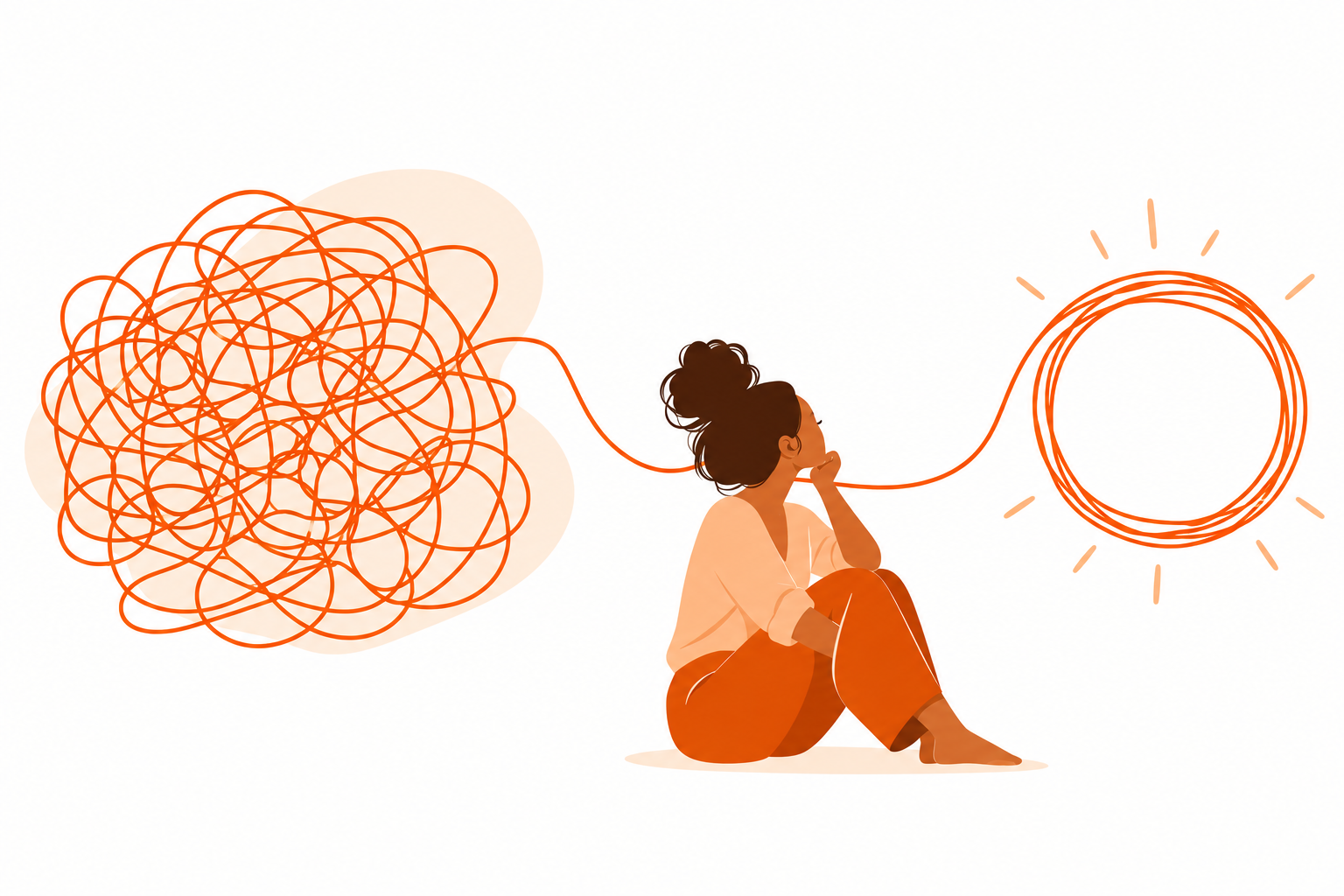
What if this particular problem isn’t asking to be solved, but to be understood?
When a Problem Is Actually a Lesson
I’ve come to believe that some of the hardest experiences in our lives aren’t problems in the traditional sense. They are lessons.
And there is a massive difference between the two:
-
A problem says: “Fix me.”
-
A lesson says: “Learn from me.”
We can waste years trying to “fix” a situation whose entire purpose is to teach us something we keep refusing to see.
That might explain why certain painful experiences seem to repeat themselves on loop—different person, different year, different circumstances, but the exact same story.
When the Faces Change, but the Pattern Remains
I once spoke with a woman who had been married four times. She was single again and joked, with a heavy sigh, that she simply had terrible luck with men.
According to her, every single husband eventually turned out to be selfish, emotionally unavailable, or mistreating in some way. So she reached a logical conclusion: Marriage isn’t for me. Problem solved.
On the surface, that looks like problem-solving. But really, it’s apathy—a passive check-out masquerading as a solution. Apathy says, “It is what it is, nothing matters, so why bother trying?” It lets us throw our hands up, play the helpless victim, and walk away from the table without learning a thing.
When four completely different people enter your life and you end up inside the exact same story four times, a deeper question is waiting:
What is this pattern trying to show me about me?
Not “What is wrong with all these men?” but “What am I not seeing?”
Maybe it’s about boundaries. Maybe it’s about what she misinterprets as love, the qualities she’s subconsciously drawn to, or what she tolerates once she’s in a relationship.
(A quick, important boundary here: spirituality should never be used to blame people for the harm others cause them. Cruelty, betrayal, and abuse are always the perpetrator’s responsibility, and you are never required to endure harm to learn a “spiritual lesson.” But even when we didn’t create what happened to us, we can still ask: What is this experience teaching me about how I want to live going forward?)
Simply avoiding marriage might prevent another divorce, but preventing a circumstance isn’t the same thing as learning the lesson. Sometimes the scenery changes, but the pattern survives.
When Restitution Cannot Restore What Was Lost
Now consider another side of the coin.
A man leaves his family for a younger woman, expecting life to get better. Instead, everything unravels. The financial fallout is devastating, his career stalls, his health deteriorates, and his relationships with his children fracture. Eventually, even the new relationship falls apart.
At his lowest point, he realizes the immense harm he caused. So he tries to fix it. He apologized, went to therapy, gave his children more time, and attempted to make restitution to his ex-wife.
And yet, the old life he destroyed does not come back. Frustrated, he concludes, “Nothing I do works.”
When consequences become painful, our immediate instinct is panic: How do I stop this? How do I make the pain go away? But apologies and behavior changes don’t obligate life—or another human being—to restore what our choices broke.
The lesson here isn’t “How do I get my old life back?” The lesson is “Who will I become now that I cannot?”
Sometimes forgiveness comes without reconciliation, growth comes without restoration, and the consequence remains even after you’ve genuinely changed—and the consequence itself becomes the classroom.
-
Maybe the lesson isn’t how to recover everything you lost—maybe it’s learning that you can lose something precious and still build a meaningful life.
-
Maybe it’s learning humility, independence, or firm boundaries.
-
Maybe it’s learning how to sit with the pain you caused someone else without running away.
-
Maybe it’s simply learning how to become a better human being.
The Shift: From Fixer to Student
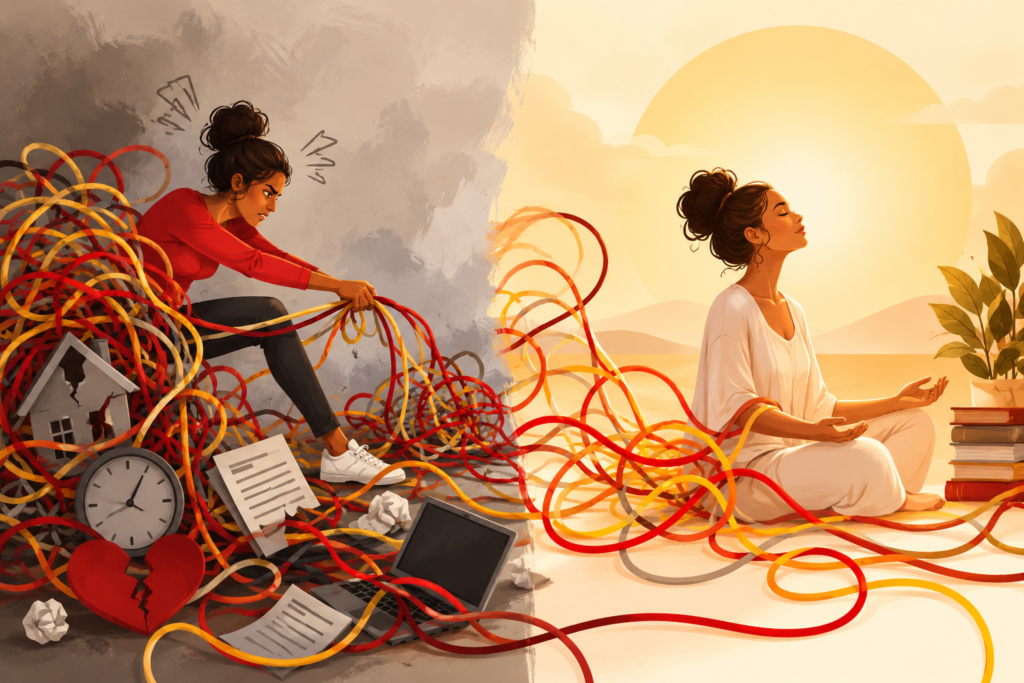
Practical problem-solving is built on control. It asks: How do I fix this, reverse this, or force an exit?
The spiritual side requires something completely different: surrender.
Surrender is often confused with giving up, but they are complete opposites. While apathy surrenders your power, spiritual surrender reclaims it.
Surrender says: “I see clearly what is happening, and I accept reality as it is—not as I wish it were.”
When you surrender, you aren’t walking away from the table. You’re simply taking notes. You stop wasting your precious energy trying to force outcomes, manipulate other people, or rewrite the past. Instead, you pull your focus back to the only things actually inside your circle of control: yourself, your mindset, and your actions.
The difference comes down to three fundamental shifts:
-
From Doing to Being: A practical problem asks what you need to do next. A spiritual lesson asks who you need to be going forward.
-
From Outcome to Character: Ego focuses entirely on the outcome—saving face, keeping the money, or staying comfortable. Spirit focuses on character—integrity, humility, and truth.
-
From Restoration to Wholeness: The practical mind wants restoration: Give me back what I had. The spiritual heart seeks wholeness: Make me clean, grounded, and wise, even if I have to start over from scratch.
When you stop fighting the reality of where you are, the situation stops being an external nuisance and becomes an internal assignment. You stop asking life to remove the mountain, and you start asking for the clarity to climb it.
I Had to Learn This the Hard Way
I say all of this because I have lived it.
When my own marriage became deeply chaotic, I spent years trying to “solve” it. I prayed for God to fix it. Then I prayed for things to change. I tried becoming a better partner. I questioned myself, tried harder, and read every book I could find.
In many ways, I stayed longer than I should have because I genuinely believed that if I could just understand the problem well enough, I could fix it.
Eventually, the truth hit me: I wasn’t failing to solve the problem—I was refusing to see what the experience was asking me to understand.
Understanding required something far more painful than trying to fix things. It required stepping outside of myself. I had to accept that some choices come with unavoidable loss, and I had to stop spending all my energy trying to prevent those losses.
I had to stop asking, “Will I get everything back?” and start asking:
“Will I become whole?”
That single shift changed everything.
Changing the Questions You Ask
When a problem persists despite every honest, practical effort you’ve made, asking “How do I get out of this?” is no longer enough.
Try asking yourself these instead:
-
What truth keeps showing itself that I am resisting?
-
What consequence am I desperately trying to reverse instead of learning how to navigate?
-
What is this experience revealing about my choices, boundaries, fears, or attachments?
-
Who am I becoming because of this?
For those of us who believe in God, Creator, or a spiritual order greater than ourselves, life isn’t always working to give us what we want. Sometimes it is shaping us.
That doesn’t mean every terrible event is a divine setup, and it certainly doesn’t mean you should stay in a dangerous or abusive situation. Get safe. Seek help. Protect yourself. Solve what can be solved.
But once you are on solid ground, look back and ask: What did this come to teach me?
Because some problems don’t disappear when we defeat them. They disappear when we no longer need them to teach us the lesson.
The spiritual side of problem-solving isn’t always about finding the exit. Sometimes, it’s about becoming the person who is finally ready to walk through it.
Has a problem in your life ever turned out to be a lesson in disguise? Share your thoughts in the comments below—I’d love to read your perspective.
— Ms. Normal
#spiritualgrowth #problem-solving #life-lessons #personaldevelopment #msnormal