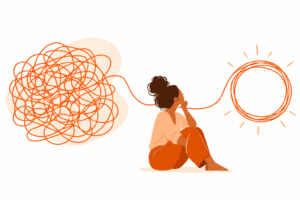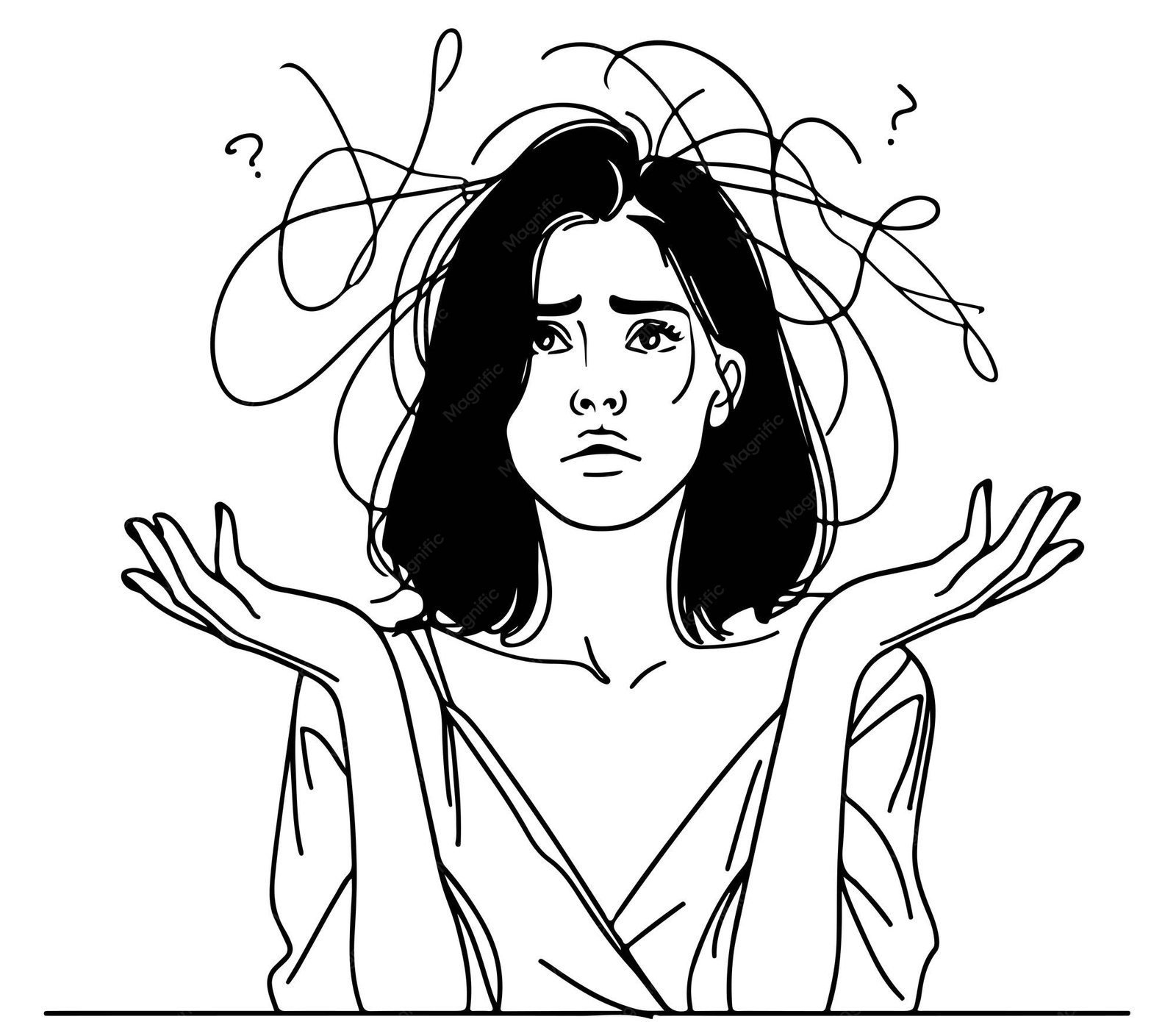
It’s somewhat ironic that I—the mother of problems—am writing a post about how to get out of one. Any one, apparently.
Honestly, problems seem to find me wherever I go, even when I’m not looking for them. And sometimes, I walk boldly and courageously directly into them—like the time I tried to DIY a minor plumbing fix and ended up flooding my entire apartment.
Small problems. Big problems. Complicated problems. Problems that arrive alone. Problems that bring cousins, aunties, and extended family members with them.
At this point, I sometimes feel like life has been training me for an advanced degree in Problem Management.
And while I certainly haven’t mastered how to avoid problems, I’ve experienced enough of them to develop a theory about how we get out.
The answer is surprisingly simple.
Not easy.
Simple.
You usually get out of a problem by reversing the mindset and behavior that helped create—or escalate—it.
And that is where most of us get stuck. Because when trouble arrives, our first instinct is often not to solve the original problem.
It is to escape the consequences.
Problems Rarely Begin Where We Notice Them
We tend to recognize a problem when it becomes painful:
-
When the relationship collapses.
-
When the money disappears.
-
When the employer discovers something.
-
When someone leaves.
-
When the lie is exposed.
-
When the consequences finally become impossible to ignore.
But that usually isn’t where the problem began. The problem may have started several decisions earlier and grew catastrophic because we tried to outrun the consequences. Take, for instance, these examples:
-
The Bank Robber: The original crime is the robbery. But when the police arrive, surrendering means accepting the consequence. Instead, he takes hostages. Suddenly, a bad decision turns into a standoff, and what began as robbery accumulates a dozen life-altering charges.
-
The Bookkeeper: She commits fraud out of desperation or entitlement. Panic sets in, but instead of stopping, she thinks: I just need to fix the paperwork. So she manipulates documents. Now she has fraud and falsified records. When a colleague notices, she resorts to threats or bribery to keep them quiet. A single corrupt choice becomes five distinct crimes.
-
The Marital Crisis: Someone cheats in a marriage. The bad choice itself is painful, but survivable through honesty and accountability. Instead, terrified of divorce, losing assets, or facing public shame, they double down—manipulating, fabricating evidence, or making threats to protect themselves. A marital problem becomes a toxic, life-destroying war.
-
The DIY Plumbing Crisis: Remember that plumbing problem I mentioned? Trying to fix it caused a small leak under the sink. It was annoying. Instead of calling a professional, I thought, “I just need a bigger wrench.” One confident trip to the hardware store later, I snapped the pipe and flooded the apartment. A $50 repair turned into a thousands-of-dollars disaster—all because I refused to ask for help when the warning signs appeared.
In every case, the fear, panic, frustration, and annoyance were meant to be the alarm saying: Stop. Something is wrong.
Instead, we ignore the alarm and use the exact same mindset that created the problem to try to solve it. We double down to dodge the smaller consequence—and end up making the fire twice as big.
The Mindset That Created the Problem Cannot Rescue You
This, I believe, is one of the most important lessons I’ve learned about problems:
The mindset that helped create the problem usually cannot be trusted to solve it.
-
If arrogance got you there, more arrogance won’t get you out.
-
If dishonesty created the problem, another lie won’t fix it.
-
If greed created the problem, grabbing more won’t save you.
-
If impulsiveness created the problem, another rash decision isn’t the answer.
Yet this is exactly what we do: we double down. We turn manageable mistakes and bad choices into total catastrophes because we refuse to accept the smaller consequence.
Someone lies, then tells six more lies to protect the first one. Someone makes a bad financial decision, then borrows more money trying to hide it. Someone hurts another person, then spends years attacking that person’s character because admitting what happened would require confronting themselves.
The danger is escalating the situation because we cannot tolerate the consequence of admitting it.
Sometimes the Consequence Is the Exit
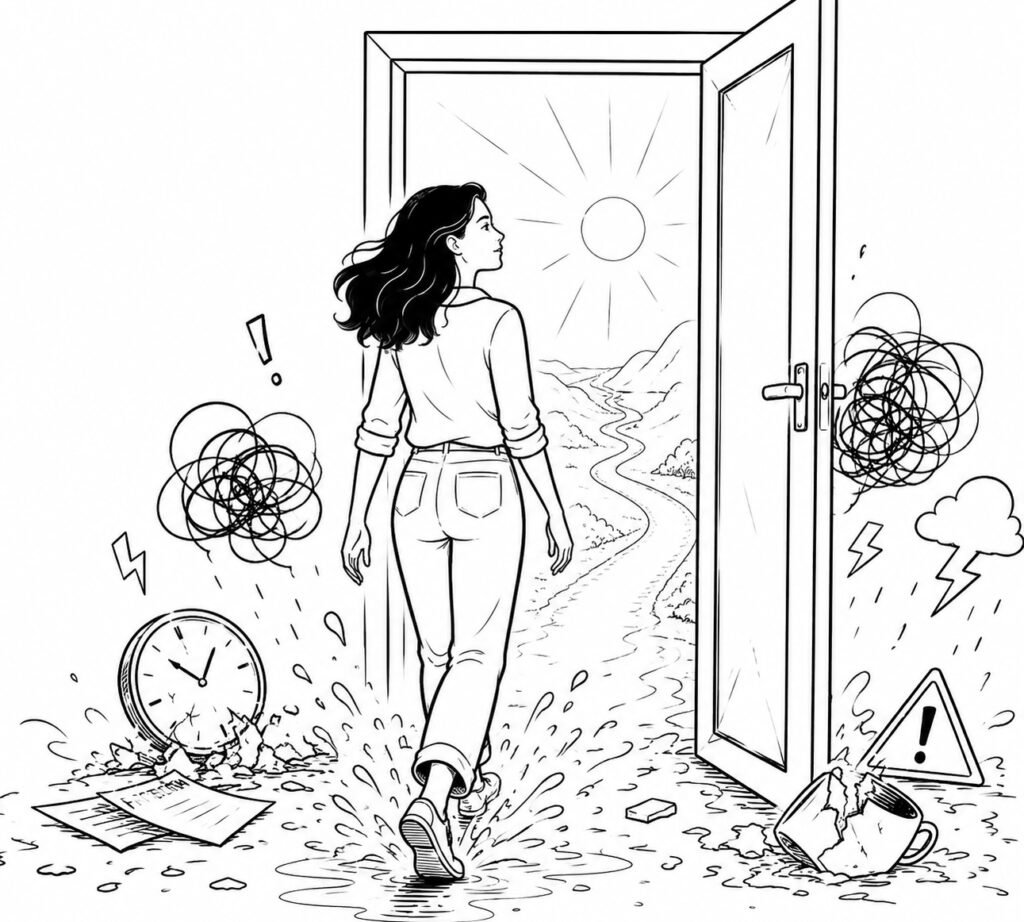
This is the part nobody likes. Sometimes the quickest way out of a problem is straight through the consequence. Not around it, not underneath it, and not through a secret tunnel you’ve spent three years digging.
Consequences force reality into the room:
-
You lose the relationship or the job.
-
You lose money.
-
You have to apologize and admit you were wrong.
None of those things are pleasant. But accepting the smaller consequence is often the doorway that prevents a much larger disaster.
Some unresolved problems don’t disappear just because you avoided immediate trouble—they just go quiet and slowly eat through other parts of your life. You can win the argument and lose the relationship. You can keep the money and lose your peace.
So, How Do You Actually Get Out Of a Problem?
I could say: Don’t get into one. Wonderful advice, but completely useless.
Problems are part of being alive.
The goal cannot be to live a problem-free life. The goal is to learn how to recognize when you’re inside one—and stop feeding it.
1. Ask Yourself: How Did I Get Here?
Start with painful honesty:
-
What decision did I make?
-
What warning did I dismiss?
-
What consequence was I trying to avoid?
-
What part of this belongs to me?
2. Do a Complete 180
Once you understand what is feeding the problem, pivot entirely:
| If the problem was created by… | Shift your direction toward… |
| Lying | Absolute truth |
| Entitlement | Practice humility |
| Impulsiveness | Slowing down |
| Secrecy | Appropriate accountability |
| Pride | Asking for help |
-
If your belief was: “I’m too smart to get caught,” replace it with: “I’m not going to build my life around what I can get away with.”
-
If your belief was: “The world owes me this,” replace it with: “I am responsible for how I pursue what I need.”
-
If your belief was: “I cannot survive the embarrassment of admitting this,” ask yourself: “Will hiding it create something worse?”
Because embarrassment passes. Some consequences don’t.
3. Go Back to the Original Problem
This is another place where we get lost. After months or years of managing consequences, we forget what the original problem even was. Go back.
If you hurt someone, acknowledge the harm. If you owe something, figure out how to repay it. If an apology is appropriate, apologize. If restitution is possible, consider it.
If professional or legal guidance is needed, get it before making another move.
Sometimes: “I was wrong. I’m sorry. How can I make this right?” are among the most powerful problem-solving sentences in the English language.
4. Borrow Someone Else’s Brain
Sometimes you genuinely cannot see the problem clearly. Of course you can’t. You’re standing inside it.
Your emotions are involved. Your ego is involved. Your fear is involved. Your money, your children, or your reputation may be involved.
When you are standing inside the fire, your ego, fear, and emotions blind you.
Seek outside perspective and take their guidance: a therapist, counselor, trusted mentor, lawyer, or financial professional. Choose advisers carefully and tell them the truth—you don’t need someone who automatically agrees with you and helps you dig. You need someone ethical enough to say, “I understand why you feel that way, but this next decision is not going to help you.” Be humble enough to take their guidance.
5. Stop Fighting Every Consequence
This may be the hardest lesson of all. Sometimes there is no consequence-free escape.
-
You may lose something.
-
You may have to start over.
-
You may have to accept embarrassment.
-
You may have to admit you misjudged someone.
-
You may have to walk away from money.
-
You may have to rebuild trust.
-
You may have to live with the fact that some people will never understand your side of the story.
The instinct to avoid all consequences is exactly what can turn a manageable problem into a life-altering one.
So ask yourself: What is the smallest honest consequence available to me right now? Accepting that consequence is how you stop the escalation.
But What If You Didn’t Create the Problem?
Up to this point, we’ve talked about problems of our own making. But what happens when the fire wasn’t started by you?
Watching the Netflix documentary series The Death of the Pastor’s Wife about Mica Miller makes you ask: How do you get out when the problem was forced upon you? An abusive relationship, financial control, or a dangerous situation are not problems you solve by asking, “What did I do wrong?”
Instead, ask: “What am I dealing with, and what part of getting out is still within my control?”
In this case, a 180 turn isn’t about correcting a mistake you made. It’s about changing how you respond to what someone else is doing to you.
Leaving a destructive situation can be the most dangerous and complex part. The 180 needs to be strategic:
-
Tell safe people the whole truth.
-
Document what is happening.
-
Get professional help and create a safety plan.
-
Allow trusted people to carry what has become too heavy for you alone.
Taking responsibility for your way out does not mean taking responsibility for someone else’s abuse. It means identifying whatever power you still have—and using it.
Problems Are Expensive. Stop Adding Interest.
I’ve learned that problems behave a little like debt:
-
Ignore them long enough and they accumulate interest.
-
Lie about them and the interest rate increases.
-
Add another bad decision and you’ve refinanced the whole thing at a terrible rate.
-
Bring other people into the mess and congratulations—you may now have co-signers.
Eventually, you are no longer dealing with the original problem. You’re just servicing the debt. And that can become exhausting.
The goal isn’t to live without problems. The goal is to stop turning one problem into ten.
Your Turn
Think about one problem in your life right now. Just one.
Ask yourself:
-
Where did this actually begin?
-
What mindset or behavior is keeping it alive?
-
What consequence am I trying desperately to avoid?
-
What would happen if I stopped running from the consequence and started correcting the problem?
You may discover that the exit has been there all along. You were just facing the wrong direction.
If this resonated with you, share it with someone who might be standing in the middle of a problem trying to find the exit. And if you’ve ever escaped a problem by finally doing the exact thing you were avoiding, tell me your story in the comments below.
— Ms. Normal
#getoutofaproblem #howtosolveaproblem #dealwithconsequences #stopescalatingmistakes