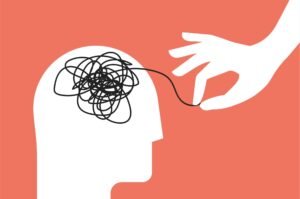
After I published my last post on finding your therapy, I kept thinking about the question that inspired it: How do you know you have trauma, and what do you do if you can’t afford therapy?
Writing that post made me reflect on my own healing journey. Not just how it started, but how it changed over time. The slow, uneven, surprising ways healing reshaped my life. The setbacks. The progress. The parts of me that improved in ways I never expected.
It also forced me to face a hard truth.
Some people spend years trying to heal. They read the books. They journal. They pray. They meditate. They try therapy. They learn the language of trauma. They can explain their wounds with remarkable clarity.
But still don’t heal.
I know, because for a long time, I was one of them.
And then something changed.
Not because I found a new therapist or discovered a new modality.
But because I made one unpopular, uncomfortable, and deeply inconvenient change.
It turned out to be the most therapeutic gift I ever gave myself.
Why Trauma Keeps Us Stuck
In Thou Shalt Not Weaponize Trauma, I explained what trauma actually does to the brain.
Trauma is not just a bad memory. It is not simply “something painful that happened.” Trauma affects the body, the brain, and the nervous system. It can leave the brain stuck in survival mode, disrupting rational thinking, memory, and emotional regulation long after the original harm has passed.
That is also why trauma healing is more complicated than people assume.
Therapy can help. Rest can help. Community can help. Reflection can help. There are many legitimate paths toward healing.
But here’s the part most people don’t acknowledge:
Most people don’t complete therapy. And many who do don’t get better.
Not because therapy doesn’t work.
But because their environment keeps re‑injuring the wound.
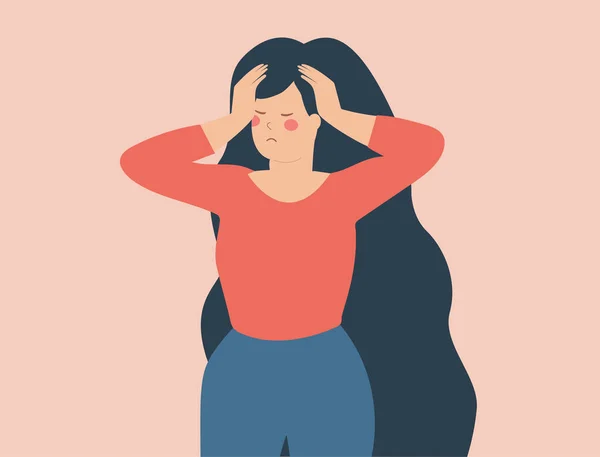
You Cannot Heal in the Same Environment That Hurt You
This was the truth I had to learn the hard way.
You can go to therapy every week. You can journal faithfully. You can pray, regulate, reflect, and do all the “right” things. But if you keep returning to an environment that destabilizes you, shames you, confuses you, or harms you, your system may remain stuck in survival mode.
Imagine a woman whose trauma comes from her partner’s infidelity, emotional abuse, or chronic mistreatment. She goes to therapy. She journals. She meditates. She tries to regulate her nervous system.
But every night she returns to the same unchanged environment that breaks her down. Her brain enters persistent alarm mode.
How can healing take root when the soil is poisoned?
I lived this cycle for years.
I understood my wounds, I could name my triggers, and I could explain my trauma responses with textbook clarity.
And yet I wasn’t healing.
I kept relapsing — emotionally, mentally, spiritually — because I was still inside the environment that created the wound. I was retraumatizing myself without realizing it.
A woman once told me her partner constantly mocked her for seeking treatment for postnatal depression. He told her his mother and grandmother had more than eight children and “never needed help,” implying she was weak or lazy. He constantly told her to toughen up.
That kind of emotional cruelty doesn’t just hurt — it destabilizes the nervous system. It keeps the brain in survival mode.
Chronic retraumatization can lead to complex trauma, PTSD, and long-term cognitive consequences. That woman told me she suffered from debilitating back pain that hadn’t responded to medical treatment. Mine manifested as mild memory impairment.
And eventually, I had to admit something I had resisted for a long time:
I was not failing at healing. I was trying to heal in a place that kept injuring me.
The Moment My Healing Finally Began
I removed myself from the environment that kept reopening my wounds.
It wasn’t easy, convenient, or socially applauded.
But it was necessary.
Once I stepped away, therapy finally started working.
My tools made sense.
My nervous system began to settle.
My memory improved.
My anxiety reduced.
My confidence returned.
I could breathe again.
I became intentional about who I surrounded myself with — people who understood what I was going through, who supported my healing, who didn’t mock or minimize my pain.
That was the moment my healing truly began.
Your Environment Is Your Number One Healing Tool
We don’t say this enough:
Your environment shapes your life — your healing, your success, your emotional stability.
Have you ever noticed how some people enter your life and suddenly everything flows?
You feel steadier. Lighter. Clearer. More like yourself. Your energy returns. Your hope expands. You start making better decisions. Life feels less heavy.
And then there are environments that do the opposite. Your mood drops. Your progress stalls. You become anxious, withdrawn, irritable, or exhausted. You feel yourself shrinking. You are always broke. Always recovering, always bracing, always trying to get back to baseline.
Eventually, you start to lose everything dear to you.
This is not coincidence, it is the power of environment.
Who you live with matters. Who speaks into your life matters. What you are repeatedly exposed to matters. What your nervous system has to survive each day matters.
During trauma healing, distance from the trigger is not always avoidance. Sometimes it is wisdom. Sometimes it is treatment. Sometimes it is the very thing that allows every other form of healing to finally work.
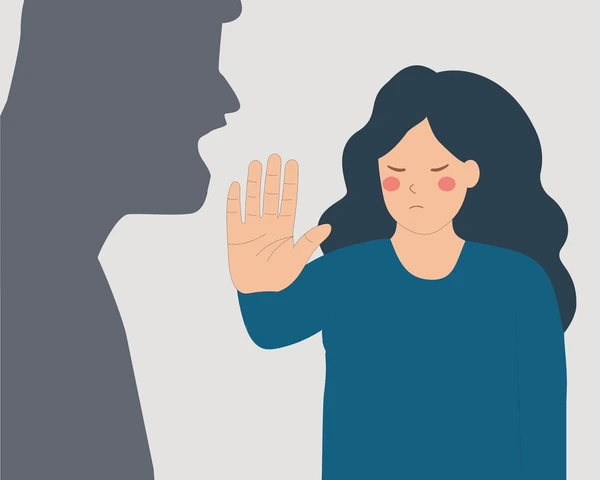
Not Everyone Can Leave Right Away
Some people share children, finances, homes, cultural pressures, immigration realities, or fears that make separation difficult. Some people are not in a position to leave today, even if they know they need to. That reality deserves compassion.
Know that distance does not always begin with physically leaving overnight.
Sometimes it starts with naming what is happening honestly. And sometimes it begins with boundaries, private support, financial planning, or refusing to keep handing someone unrestricted access to your mind and body.
When Someone Keeps Hurting You on Purpose
There is another painful truth many people need to hear.
If someone knows what deeply hurts you and keeps doing it, that is not a small issue. If they mock your healing, belittle your therapy, minimize your pain, or sabotage your progress, they are not acting as a safe person in your life.
They are not just retraumatizing you, they are also trying to break you.
Staying in that environment gives them the power to finish the job.
And when you finally begin to separate yourself — emotionally, physically, or mentally — they often sense it. That’s when a different pattern emerges:
They will challenge your separation. They may suddenly become unusually kind. They may seem remorseful. They may sound supportive or act like they finally understand.
Sometimes that change is real. But sometimes it is simply a reaction to your distance, a response to losing access. It’s an attempt to pull you back into the very environment that is destroying you.
This is where discernment becomes essential.
Your separation is not about whether they are being nice today.
It is about whether you can heal in their presence — and often, you cannot, because the moment you resist their pull, their true nature begins to show.
Your healing is not dependent on their remorse.
Your safety is not dependent on their promises.
Your progress is not dependent on their cooperation.
Your separation is about you — your nervous system, your peace, your future.
Whether they support your healing or not, you are allowed to choose yourself.
The Most Therapeutic Gift To Yourself
The most therapeutic gift you can give yourself is not a journal, a meditation app, or a new therapist.
It is safety.
It is distance.
It is choosing yourself.
Sometimes the bravest healing decision is to walk away —
from the person,
the environment,
the dynamic,
or the pattern
that keeps reopening the wound.
Healing doesn’t begin with insight.
It doesn’t begin with the perfect therapist, the right book, or the most advanced modality.
Healing begins the moment you stop returning to what hurts you.
The moment you choose safety over familiarity.
The moment you choose peace over chaos.
The moment you choose yourself — even when it’s inconvenient, uncomfortable, or misunderstood.
The best therapeutic gift you can give yourself is not a technique.
It is permission.
Permission to walk away.
Permission to create distance.
Permission to build a life where your nervous system can finally exhale.
Because once you are safe, your healing will not just begin — it will accelerate.
And you deserve that kind of life.
Call‑to‑Action (CTA)
If this resonated with you, I’d love to hear your story.
What environment have you had to step away from — or are still trying to?
Share your thoughts in the comments, or subscribe to receive the next part of this healing series.
Your journey might be the mirror someone else needs.