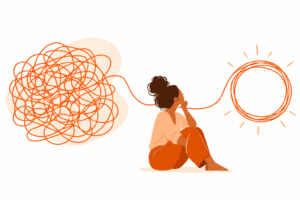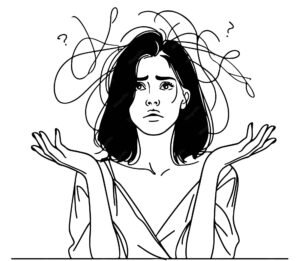
This post is not an attempt to diagnose anyone but to speculate about what could be happening in a situation like this.
— ⋅ — — ⋅ — — ⋅ —
The Story That Started It All
Remember the man I wrote about?
The one from The Danger of Deception — the husband who loved his wife deeply, made a painful mistake, and then watched his marriage unravel in slow motion.
He wasn’t careless or indifferent. He was desperate.
He was trying everything he knew to fix what had been broken. He had done psychotherapy. They had gone through marriage counseling. He believed he had made real progress from the part of himself that led to the deception.
But when we spoke, he was exhausted and terrified. He felt like the ground beneath him was giving way, because his wife’s heightened sensitivity and hypervigilance around the relationship was slowly eroding his hope for their future together.
In that conversation, I helped him see how deeply his wife may have been wounded by his deception and encouraged him to support her trauma recovery.
I admired his courage. He was willing to do the uncomfortable work.
But he hesitated.
He told me he didn’t know how to suggest individual mental health support or therapy to his wife. She didn’t believe anything was “wrong” with her. In her mind, he was the one who messed up. He was the one who needed help.
And I understood that tension immediately.
Because in many spaces, suggesting therapy doesn’t sound like support.
It sounds like accusation.
His fear shocked me, but it didn’t surprise me.

The Part That Shocked Me — And the Part That Didn’t
I was shocked because this woman had experienced a deeply hurtful marital deception and had still chosen to stay, to forgive, and to try. She had even gone through marriage counseling with him in an effort to save what had been broken.
That is no small thing.
That kind of decision takes strength. It takes faith. It takes emotional labor most people will never fully understand unless they’ve lived it.
She also has a partner who genuinely wants to heal with her.
So naturally, one would expect that, alongside his remorse and efforts to rebuild trust, she too would be open to the kind of support that could help her process what had happened to her. Not because she was “the problem,” but because betrayal leaves wounds, even when love remains.
And if you are willing to fight for the relationship, it seems only reasonable to also fight for the part of you that was wounded inside it.
But I wasn’t surprised.
Because many people do not understand trauma, especially emotional trauma. They may recognize pain, betrayal, or anxiety, but not always as trauma. They don’t always realize when something has wounded them deeply enough to change how they think, feel, trust, or function.
And even when they are open to marriage counseling, they may still see psychotherapy as something reserved for people who are broken, unstable, or deeply flawed, rather than as a valid path to healing emotional wounds.
That lack of understanding is more common than people think.
I’ve lived this.
There was a time in my life when I was barely holding it together. I sought help quietly and intentionally. And when a few people found out, the reactions were… revealing.
“Is something wrong with you?”
“Are you okay… like mentally?”
Whispers. Side comments. Judgment.
Some even used it against me. A few weaponized my vulnerability.
So when this man worried that suggesting therapy would offend his wife, I understood. People don’t just misunderstand trauma. They often misunderstand what healing support is actually for.
They don’t realize trauma is a human experience, not a character flaw.

What Trauma Actually Does
Trauma is not just a bad experience. It is an overwhelming one that disrupts your sense of safety, your identity, and how you interpret the world.
It can come from:
• Emotional or psychological trauma: abuse, betrayal, loss, violence, accidents
• Physical trauma: serious injury, burns, head trauma
• Complex trauma: repeated or invasive harm such as assault or long‑term abuse
When something overwhelming happens, the brain can become wired for survival. The fear center becomes overactive. The rational part of the brain struggles to stay online. Memory and emotional processing become disrupted. This is why trauma survivors can feel hijacked by emotions they do not fully understand. It is why the same triggers can produce the same reactions years later.
Such reactions often include fear, hypervigilance, distrust, avoidance, emotional numbness, and intrusive memories.
According to Bessel van der Kolk in The Body Keeps the Score, being traumatized means continuing to live as though the danger is still present — even when it’s not.
That means:
• You react to the present through the lens of the past
• You anticipate harm where there may be none
• You protect yourself even when protection is no longer needed
Trauma reshapes how we see ourselves, others, and the world. And unless we address it, it stays in the body, influencing every relationship and decision.
The good news? Trauma can be treated. It can be healed. With the right support, people can reclaim their lives.
But Here’s Where It Gets Complicated
Trauma explains behavior. It does not excuse harm.
And this is where many relationships quietly begin to break.
In this woman’s case, her pain was real. Her fear was real. Her mistrust was real. Her reactions made sense:
Monitoring his movements
Questioning everything
Restricting interactions
Living in constant suspicion
But these are trauma responses — not random behaviors.
And when trauma responses go unaddressed, something shifts.
Pain becomes control.
Fear becomes restriction.
Hurt becomes punishment.
And that is where trauma crosses a dangerous line.
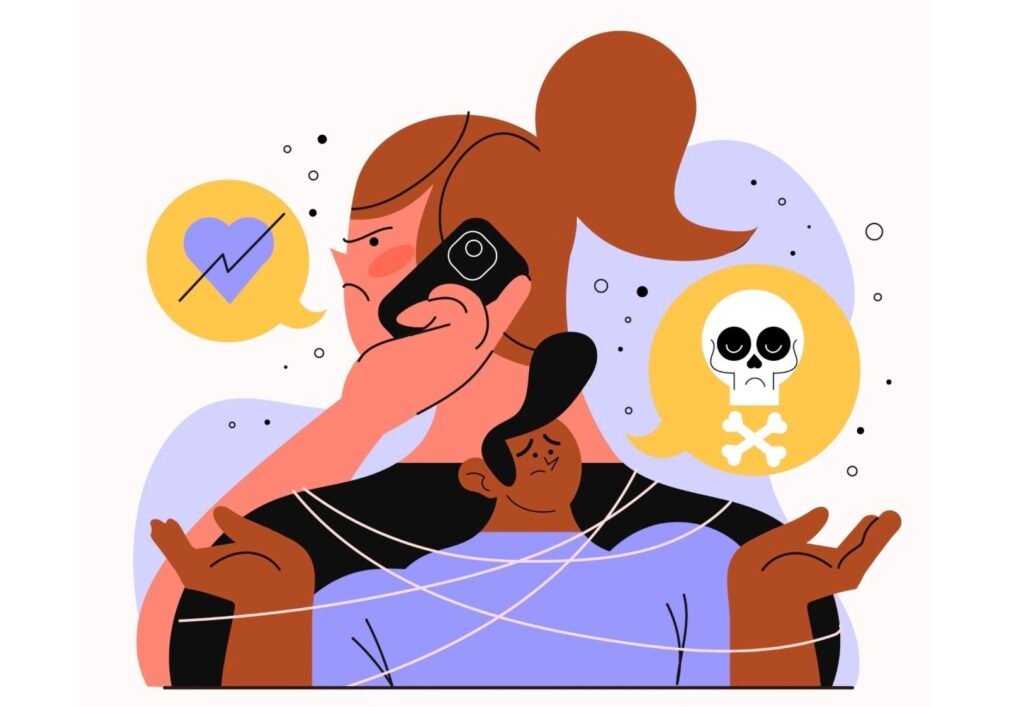
When Trauma Becomes a Weapon
Weaponizing trauma is subtle. It doesn’t always look aggressive. Sometimes it sounds like:
“My pain justifies how I treat you.”
“I don’t need to heal. You just need to suffer.”
“Because of what you did, you owe me unlimited access, forever.”
Or beyond relationships:
• Refusing accountability because “this is how I am now”
• Using past trauma to justify harmful behavior
• Blaming trauma for repeated patterns without seeking help
Let me be clear:
Having trauma is not the problem.
Refusing to take responsibility for how it impacts others is.
When healing is avoided and harm continues, trauma stops being a wound.
It becomes a weapon.
Why Many People Never Seek Help
People avoid healing not because they don’t need it, but because:
• They don’t recognize their reactions as trauma
• They fear being judged
• Their culture stigmatizes mental health care
• Their community spiritualizes everything
• Their upbringing taught them to “be strong”
• Their trauma has become familiar, even protective
So they cope the only way they know how.
They control.
They withdraw.
They attack.
They endure.
But coping is not the same as healing.

What Healing Could Look Like
If I could speak directly to that woman, or any woman in a similar place, I would say this:
You are not wrong for feeling what you feel.
But you are responsible for what you do with it.
And there’s something else I wish more women understood.
The danger is not only in how trauma shapes your reactions, but in how those reactions are interpreted, especially in mainstream therapy, when the full context isn’t known. Without understanding the background, a therapist could easily label your behavior as manipulation or abuse. And let’s be honest, untreated trauma can spill into those territories without you even realizing it.
But healing can happen.
A reasonable path to your recovery might include:
1. Acknowledging the trauma with honesty, not shame.
You don’t have to minimize it. You don’t have to justify it. Just name it.
2. Seeking professional support from someone trained in trauma.
Not because you’re “broken,” but because you deserve support that honors what you’ve lived through.
3. Creating space for emotional processing.
Journaling, support groups, trusted conversations — anything that helps you release what your body has been holding.
4. Rebuilding internal safety.
Through grounding practices, boundaries, and self‑compassion. Safety starts inside you, not outside.
5. Rebuilding relational safety slowly.
Not through surveillance or control, but through communication, clarity, and mutual effort.
6. Allowing healing to be a personal journey.
Not a punishment. Not a performance. Not a bargaining chip. Healing is for you.
And hear me clearly:
Healing is not about protecting the relationship at all costs.
It is about restoring yourself — whether the relationship survives or not.
What Happens If You Don’t Heal
Unhealed trauma doesn’t stay contained. It spreads.
Into your marriage.
Into your parenting.
Into your friendships.
Into your future.
You risk losing a partner who genuinely wants to heal with you. And if the relationship ends, the wounds follow you into the next one — and the next — until you finally choose healing.
This is why so many people repeat the same patterns for years.
Not because they’re cursed.
Because they’re unhealed.
I know how hard it is to accept that betrayal can leave lifelong marks. I’ve lived through it. But I chose not to carry that pain forever.
My goal wasn’t to fix the person who hurt me.
It was to heal the parts of me that were wounded in the process.
A Final Word to Any Woman Carrying Wounds
Recognizing your wounds doesn’t mean you’re broken. It means harm was done to you. And you deserve to understand that harm, its impact, and how to heal from it.
Your healing is your superpower.
It gives you clarity, courage, and the freedom to choose your future with confidence.
Whether you stay, leave, rebuild, or begin again, healing ensures you do it from a place of strength rather than survival.
Call to Action
If this message resonates with you, share it with someone who may need it. And if you’re navigating your own healing journey, consider subscribing to my blog for more reflective stories, grounded insights, and conversations that honor both truth and growth.
Sometimes the most powerful thing we can do is refuse to let our trauma become someone else’s wound.