At some point, every one of us has faced the same unsettling question:
What’s your worth?
It usually shows up when life hits hard—after rejection, disappointment, betrayal, failure, or loss.
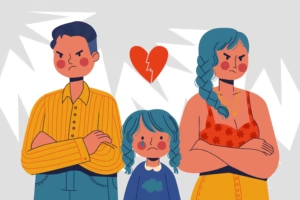
Sometimes it comes from people who should have protected us.
Sometimes it comes from people who barely knew us.
Maybe it was a parent who constantly criticized us. A teacher who underestimated us. A boss who overlooked our contributions. A spouse who made us feel replaceable.
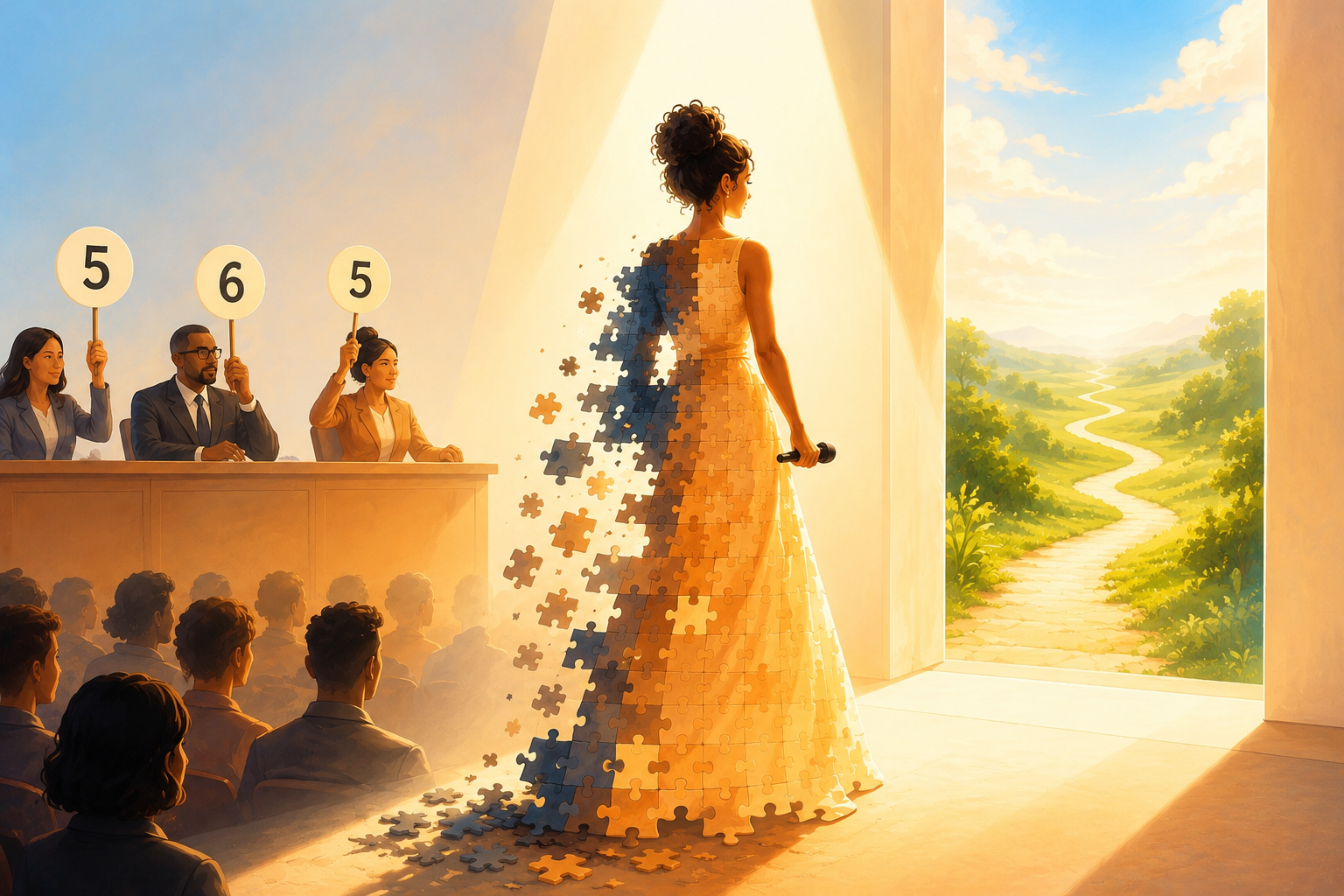
Or perhaps it was society itself, measuring our value by beauty, money, status, education, age, or usefulness.
If we’re honest, most of us have spent at least part of our lives carrying those verdicts around.
Not good enough.
Not qualified enough.
Not important enough.
The world has no shortage of people willing to tell us who we are. Some will even attempt to convince us they have the power to take our value away.
But over the years, I’ve come to believe something different.
I’ve come to believe that much of what we call self-worth is built on a flawed assumption: that other people have the authority to determine it.
What if they don’t?
What if the people who judged our worth only encountered a chapter of our story and mistook it for the whole book?
What if our value existed before their approval and survives long after their rejection?
That possibility changed the way I think about worth, identity, and the experiences that shape us.
Let me explain.
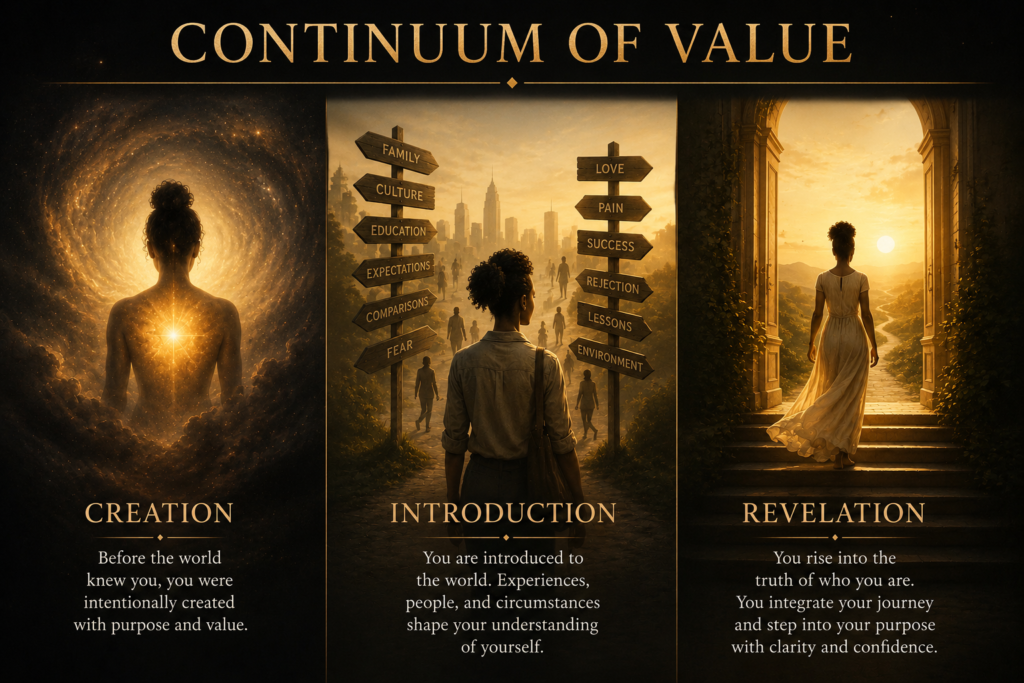
Continuum of Value: Creation, Introduction, and Revelation
To understand value, I find it useful to think about life in three stages:
Creation. Introduction. Revelation.
Creation is where value begins. Not because we earned it but because we were created.
Introduction is where we are introduced to the world and where that value is tested, challenged, and obscured.
Revelation is where we begin to recognize what was there all along.
Together, they form what I think of as the Continuum of Value:
the enduring thread of human worth that begins at creation, survives every life experience, and is ultimately rediscovered through revelation.
The distinction matters because many of us spend our lives confusing our introduction with our creation.
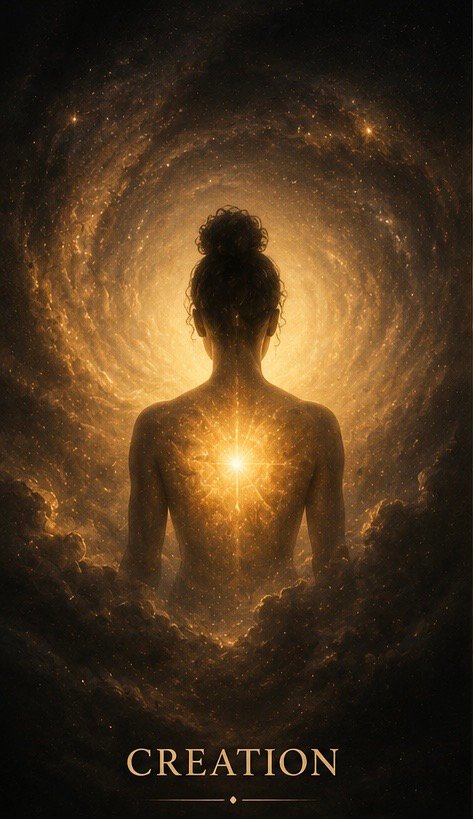
The Value Before the World Had an Opinion
Whether we believe in God, divine intelligence, universal consciousness, or a deeper order to existence, most of us instinctively sense that our lives have meaning.
We may not always understand what that meaning is, but we feel it, pursue it, search for it, and ache for it.
This pursuit indicates that, even before we were introduced to the world, something already existed within us.
The reality is that no one can definitively prove why God, the universe, or any other creative intelligence would create human beings with inherent worth.
Yet across religion, philosophy, human rights traditions, and cultures throughout history, societies have repeatedly arrived at a remarkably similar conclusion:
A person’s value exists before achievement, status, usefulness, or approval.
Religions explain this by saying human beings are created in the image of God.
Humanists argue that consciousness itself confers dignity.
Others believe life is valuable because it is extraordinarily rare, interconnected, and irreplaceable.
Different paths.
Similar conclusion.
But I think the more interesting evidence lies in a different question:
Why do so many of us instinctively feel wounded when our worth is questioned?
If value were entirely invented, why would rejection hurt so deeply?
Why would humiliation feel like a violation?
Why would people spend years trying to recover from being treated as though they were worthless?
Perhaps because somewhere beneath the conditioning, the labels, and the stories we have been told about ourselves, we carry an intuitive sense that something fundamental has been violated.
Not sacred in a religious sense necessarily.
Sacred in the sense that we recognize a gap between how we are being treated and what we believe we deserve simply because we are human.
Maybe that is why rejection hurts. Not because it destroys our value, but because it challenges something we instinctively know to be true.
Perhaps our deepest wounds are not evidence that we have lost our worth. Perhaps they are evidence that, somewhere deep within us, we know it was there all along.
Creation comes before introduction.
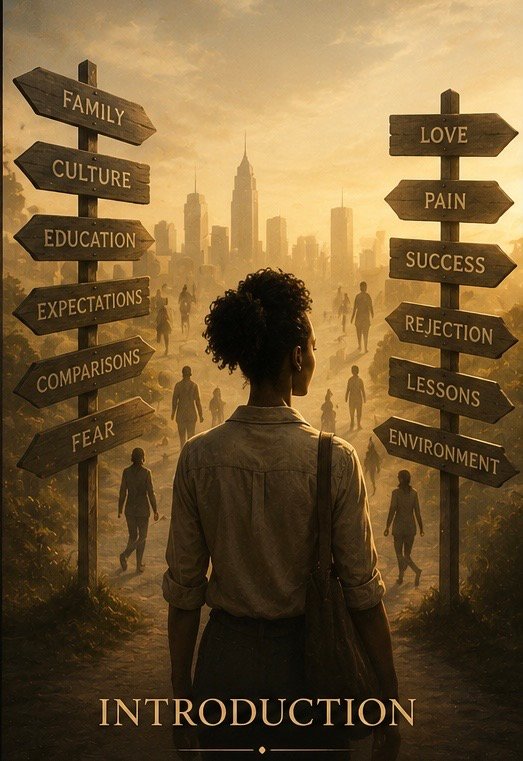
Introduction: The Season That Shapes Us
Introduction begins at birth.
This is the phase most of us mistake for reality.
It is where family, culture, education, religion, relationships, opportunities, trauma, and life experiences begin shaping our understanding of ourselves.
People start telling us who we are.
Some encourage us. Others diminish us. Some help us discover our gifts. Others convince us we have none.
And because introduction lasts for so much of our lives, many of us assume these experiences define us.
But they don’t.
They influence us.
They shape us.
They challenge us.
But they do not define our original value.
This is where many of us begin asking, consciously or unconsciously:
What’s your worth?
And too often, we answer that question using the opinions of people who only met us during our introduction.
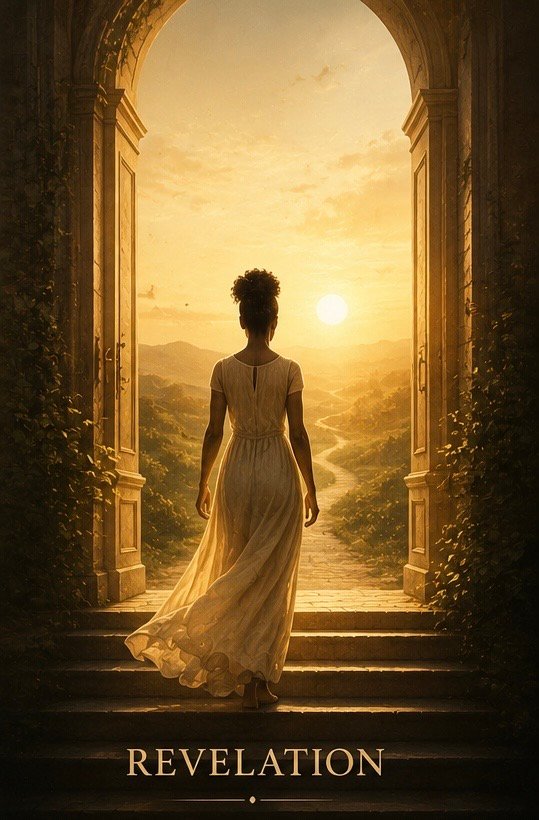
Revelation: The Moment We Remember Ourself
Revelation is where life begins to come full circle.
It is the moment when we start distinguishing between who we were told we are and who we actually are.
It is the season when inherited labels begin falling away, when self-knowledge begins replacing self-doubt, and when we stop asking others for permission to exist.
Revelation is not about becoming valuable.
It is about recognizing the value that was already there.
And that changes everything.
The People Who Only Met Our Introduction
One of the greatest mistakes we make is allowing people who met us during our introduction to define our creation.
Think about it.
The bully who mocked us in school.
The employer who underestimated us.
The friend who betrayed us.
The partner who abandoned us.
The family member who constantly criticized us.
These people met us at a particular moment in our story.
A chapter.
A season.
A circumstance.
But they did not meet our entirety.
When people meet us during our introduction, they are experiencing a single phase of our life.
They are seeing circumstances, not essence.
Potential, not completion.
Process, not purpose.
They are missing most of the story.
And we have seen the same danger play out across entire societies.
The strong determine the value of the weak.
The rich determine the value of the poor.
The majority determine the value of the minority.
The powerful determine the value of the powerless.
History shows us where that leads.
Slavery.
Genocide.
Caste systems.
Misogyny.
Colonialism.
The dehumanization of entire groups of people.
In every case, someone first decided that certain human beings possessed less value than others.
Yet history also reveals something hopeful.
Human beings repeatedly move toward a broader recognition of dignity.
Slavery was challenged.
Women gained rights.
Colonized people demanded self-determination.
Marginalized groups fought for recognition and dignity.
Progress has rarely been perfect, but the direction is revealing.
Again and again, societies expand their understanding of who deserves respect, freedom, and opportunity.
As though we are slowly remembering something we forgot.
That value belongs to people before anyone has the authority to assign it.
And if value originates at creation itself—whether by God, nature, consciousness, or some universal intelligence—then nothing that happens during our introduction can permanently alter it.
The people who met our introduction were never qualified to define our creation.
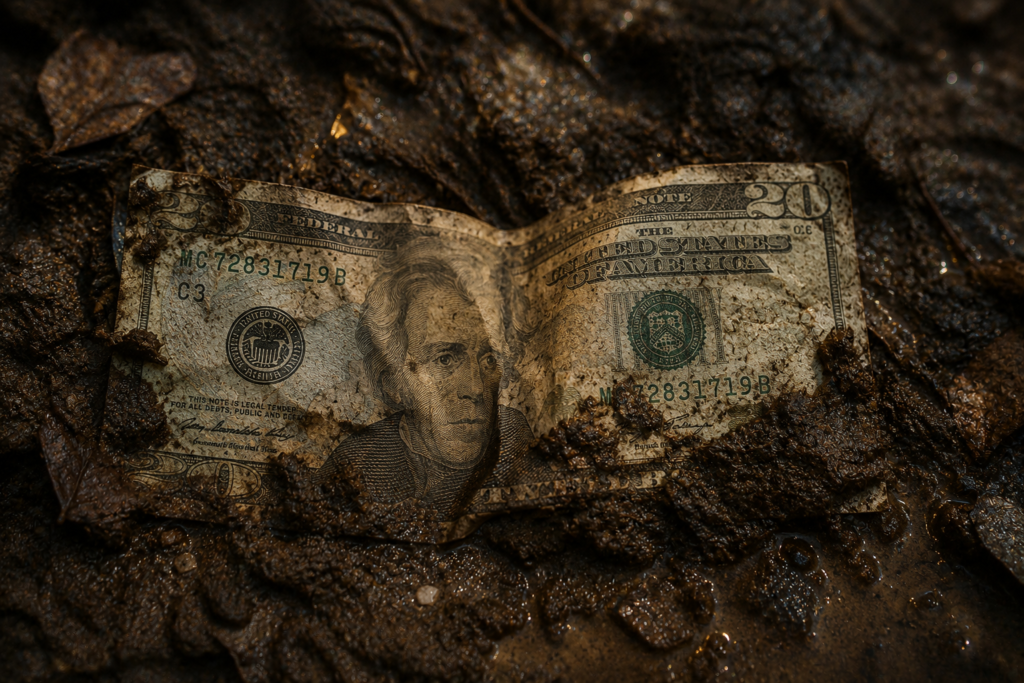
The $20 Bill in the Mud
Years ago, I heard a motivational speaker use an illustration that has stayed with me ever since.
He held up a $20 bill.
Then he crumpled it.
Dropped it.
Stepped on it.
Rubbed it in dirt.
Bent it.
Wrinkled it.
Then he asked the audience:
“Who still wants it?”
Every hand went up.
Because everyone understood something instinctively.
Its condition had changed, but its value had not.
Life does this to people.
Some of us have been stepped on.
Discarded. Humiliated. Abandoned. Manipulated. Traumatized.
And eventually we begin mistaking our condition for our worth.
But they are not the same thing.
We confuse them all the time.
We mistake divorce for failure.
Unemployment for uselessness.
Rejection for unworthiness.
A difficult season for a permanent identity.
We begin describing ourselves by what happened to us instead of by who we are.
A wounded person still has value.
A struggling person still has value.
A divorced person still has value.
An unemployed person still has value.
A person rebuilding their life still has value.
The mud may be real, but so is the value.
And the mud never had the authority to rewrite it.
How Do We Discover Our Worth?
This is where the conversation becomes difficult.
Because discovering our worth is not the same as hearing motivational slogans.
It requires honesty, reflection, and sometimes deep healing.
We discover our worth by paying attention to what remains when everything else is stripped away.
Who we are without the title, relationship, paycheck, applause?
Without the role we’ve been performing for others?
Most people spend years avoiding these questions.
But revelation begins when we stop running from them.
When we confront the experiences that shaped us.
When we examine the stories we’ve inherited about ourselves.
When we stop allowing old wounds to define our future.
And when we stop weaponizing our pain against ourselves and others.
The path looks different for everyone.
For some, psychotherapy helps uncover the roots of those beliefs.
For others, meditation, prayer, contemplation, or spiritual practice helps reconnect them to something larger than themselves.
Whatever form it takes, the work is ultimately the same:
Separating who we are from what happened to us.
Because our worth is often hidden beneath the very wounds we’ve spent years trying to escape.
And sometimes healing is simply the process of uncovering what was there all along.

How Do We Know It’s Time for Revelation?
Usually, life forces the question.
A divorce, a layoff, a betrayal, a diagnosis, a season of isolation, a major transition.
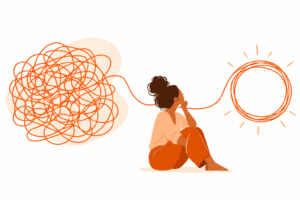
When the identities that once held everything together stop working, and the masks begin cracking.
And suddenly we’re standing face to face with ourself.
Painful as these seasons can be, they mark the beginning of revelation.
Not because suffering is noble, but because disruption forces clarity.
The false identities collapse, and what’s left becomes impossible to ignore.
What Happens If We Succumb?
We begin living from our introduction instead of our creation.
We start believing the labels, the criticisms, the limitations, the wounds.
We spend our life defending a false identity that was never ours to begin with.
And eventually, we surrender our power to people who never possessed it.
The tragedy is when we begin to believe those who underestimated us.
If you’ve ever experienced a relationship where your value was diminished, manipulated, or challenged, you may also appreciate Nearly Making It Out Alive: The Dangerous Side of Divorce, where I explore what happens when leaving becomes not just difficult, but dangerous.
The Lesson
Perhaps the greatest responsibility of adulthood is learning the difference between what happened to us and who we are.
Life will introduce us to many versions of ourself.
The successful version.
The broken version.
The rejected version.
The celebrated version.
The lost version.
The rebuilding version.
But none of those versions are our full identity.
They are chapters.
Not conclusions.
The continuum of value reminds us that our worth does not begin with human approval and does not end with human rejection.
It existed before either.
The people who underestimated us may have been part of our introduction.
The people who wounded us may have been part of our introduction.
Even our failures may have been part of our introduction.
But none of them were our creator.
And none of them get the final word.
The invitation of life is not to become valuable.
It is to remember that we always were.
And to live accordingly.
Reflection
What season are you in right now: creation, introduction, or revelation?
Have you ever carried a label someone else placed on you?
Have you mistaken a painful chapter for your entire story?
If you are currently rebuilding after disappointment, loss, rejection, divorce, career transition, or personal upheaval, remember this:
The chapter you are in may explain your circumstances, but it does not define your worth.
Your introduction is not your identity.
Your revelation is still unfolding.
— Ms. Normal