I think this is a question men have been trying to answer for eternity: How do you really love a woman?
And I promise you, I have an answer. Just probably not the one you came looking for.
You may be expecting a quick checklist:
-
Buy her flowers.
-
Tell her she’s beautiful.
-
Take her on date nights.
-
Help out around the house.
-
Remember the anniversary.
-
Memorize her love language.
-
Do more of this; never do that.
I don’t have that list.
But if you hang on, I can teach you something about how to love a woman really, really well. And honestly, this isn’t just about women—it applies to men too. I just happen to write mostly for women, and much of what led me here came from my own messy experiences trying to understand love.
Because eventually, I realized something: there may be a million ways to love someone, but the love we actually feel is the love that meets us right where we need it most.
I call it meeting someone at their point of love.
The Flaw in the “Formula” for Love
For a long time, we have tried to make love predictable. And understandably so! Relationships are complicated, human beings are messy, so we build neat frameworks to help us navigate them.
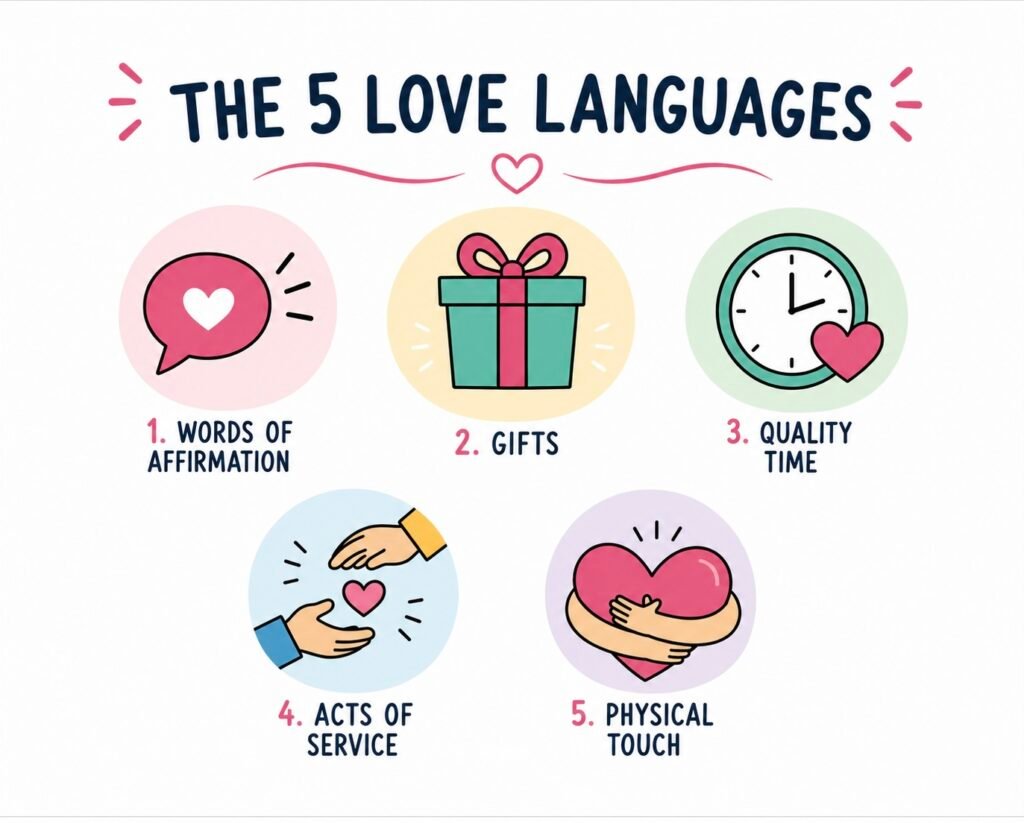
One of the most popular is the concept of love languages: words of affirmation, receiving gifts, quality time, physical touch, and acts of service. There is genuine value in understanding how someone generally likes to receive affection. Most of us can point to one or two that instantly give us those little love jitters, the gestures that make us feel seen, appreciated, and thought of.
So naturally, when I first learned about love languages, I took the idea to heart. I tried to speak everyone else’s language, and I expected the same in return.
Except something wasn’t adding up.
There were seasons in my life when someone could technically be speaking my designated love language, and I still didn’t feel loved. I felt grateful. I appreciated the gesture. Sometimes I was even happy about it. But that deep, grounding sense of being loved?
It wasn’t there.
And that confused the hell out of me.
The “I’ve Tried Everything” Trap
I remember my ex-husband once saying something along the lines of, “I’ve tried everything, but you just don’t appreciate it.”
Statements like that leave you questioning your own sanity. Maybe I am ungrateful. Maybe I’m expecting too much. Maybe this is what love looks like, and I’m simply failing to recognize it.
Because if someone says they love you, believes they are showing you love, and can point to a receipts-backed list of everything they’ve done to prove it, what are you supposed to say?
“Thank you, but I still don’t feel loved”?
It sounds almost cruel.
But what if both people are telling the truth? What if one person really is pouring out effort, and the other person simply isn’t experiencing that effort as love?
That question stayed with me.
I started paying close attention to myself, to other women, to the quiet gaps in relationships between what people said they wanted and what actually made them feel safe, held, and cared for.
I came to a simple conclusion: we have been thinking about love far too statically.
Love Languages Are Static; Life Is Not
Here is where my thinking diverges from the traditional love-language gospel.
Human beings are constantly evolving. Our circumstances change. Our bodies change. Our bank accounts, stress levels, and mental states change.
We become parents. We lose parents. We change careers or get laid off. We get sick, we recover, we grieve, we burn out, we rebuild.
Every single one of those shifts changes what love needs to look like in that specific moment.
-
Your preferred love language might still be words of affirmation, but there comes a day when sweet words feel hollow. You don’t need a pep talk; you need someone to physically show up.
-
Your love language might be gifts, but in a season of sheer exhaustion, another wrapped package feels like another item to unpack—what you desperately need is practical relief.
-
You may love physical touch, but during a period of sensory overload, love looks like being given quiet space without punishment or guilt.
-
You may love quality time, but when you are drowning in a to-do list, love sounds like: “I’ve got this. Go rest.”
The person hasn’t changed fundamentally. Her point of love has moved.
When My Own Love Language Wasn’t Enough
I learned this best during one of the hardest seasons of my life.
After having my baby, I struggled deeply with what one would call postpartum depression today, but I didn’t have a language for it then. All I knew was that I was drowning.
During that time, I was receiving things that theoretically should have hit the mark for me: words of affirmation, gifts, constant reassurance that I was a wonderful mother. They were kind gestures, and under normal circumstances, they would have touched my heart deeply.
But postpartum me couldn’t receive them.In fact, those gestures sometimes irritated me.
Deep down, I was thinking: If I’m doing so wonderfully, why can’t you see that I am falling apart?
I didn’t need to be told how strong I was; I needed someone to notice that I was tired of being strong. I didn’t need standard romantic line items; I needed presence. I needed practical, hands-in-the-mud support. I needed someone willing to step into my storm rather than standing safely on the dry bank offering what normally worked.
My general love language hadn’t changed. My point of love had. And no one was meeting me there.

How to Meet Her at Her Point of Love
This is the secret: don’t just learn what she likes. Learn her.
Pay attention to the woman standing in front of you today, not just the snapshot of the woman you met five years ago. Marriage changes people. Motherhood changes people. Loss, career stress, and age change people. When we keep loving an old version of someone, we end up wondering why the current version isn’t reacting with gratitude.
Stop asking only, “What is her love language?” Start asking:
-
Where is her point of love right now?
-
What is she carrying that I can help lighten?
-
What is exhausting her? What is she afraid of?
-
Where does she feel alone or unsupported?
-
What keeps coming out of her mouth that I keep dismissing because it doesn’t fit my definition of love?
Loving someone this way takes intention. It requires you to stop running a script and start paying real attention.
Intention vs. Impact: Why Good Intentions Still Fail
This is where I think so many good relationships stall out.
One partner says, “But I’m trying so hard!”
The other says, “But I don’t feel loved.”
Then the defenses go up. The giver lists everything they’ve done; the receiver lists everything that’s missing. Suddenly, nobody is talking about love anymore—they’re arguing over whose legal defense is more valid.
Neither person is lying. The love is just missing its target.
Love isn’t only about the intention of the giver; the experience of the receiver matters just as much. You can prepare someone’s absolute favorite meal with endless devotion, but if they are currently drowning, throwing them a plate of lasagna isn’t going to feel very romantic.
It doesn’t mean the meal was bad. It means the moment called for a life raft.
Love has to be responsive to be real.
Ladies, Your Partner Is Not a Mind Reader
Before we turn this into a “See! He should just KNOW!” rally—stop right there.
This is a two-way street. A woman has just as much responsibility to understand her own shifting point of love and actually communicate it. And trust me, that is harder than it sounds.
Half the time, we don’t even know what we need.
-
We ask for flowers because flowers used to work.
-
We say, “I just want you to tell me you love me,” when what we’re actually desperate for is emotional security.
-
We get furious about the dirty dishes in the sink, when the dishes aren’t the issue at all—they are just the physical evidence of everything we feel like we’re carrying by ourselves.
Receiving love well requires self-awareness. Instead of defaulting to “You never make me feel loved,” we have to practice saying: “The way I need to be loved in this season has changed.”
That gives a partner who genuinely cares a real roadmap to work with.
Staying Curious: The Real Work of Love
If there is one word that sums all of this up, it’s curiosity.
Real love stays curious about the person it holds. It doesn’t assume, “I married you, so I know you inside and out.” It asks: Who are you becoming right now? What is life doing to you in this season?
The answers won’t always look like a movie scene.
Sometimes love is flowers, sex, or a surprise weekend trip. But sometimes love is taking the baby at 3:00 AM without being asked. Sometimes it’s sitting quietly in a waiting room, washing the dinner dishes, taking a heavy task off her plate, giving her space, or standing right beside her.
And tomorrow? It might look completely different.
The Verdict: How Do You Really Love Her?
I promised an answer, and here it is: Meet her at her point of love.
Throw out the rigid formulas. Pay attention. Stay curious. Listen to what she says, and tune in to what she isn’t saying. Learn the difference between what makes her happy on a good day and what holds her together on a hard one.
And for the women reading this: do your work, too. Know yourself, honor your changing seasons, and speak up. Don’t expect your partner to diagnose an internal world you haven’t taken the time to understand yourself.
The deepest, most enduring form of love isn’t “I memorized your love language once.”
It’s “I am paying enough attention to notice when your language changes—and I’m willing to keep learning it.”
Over to You
Where is your (or your partner’s) “point of love” right now, and how has it shifted over time? Drop a comment below—I’d love to hear your thoughts!